
Anderson SC Divorce Records and Case Files
Anderson is the county seat of Anderson County in the South Carolina Upstate, and the Family Court responsible for all divorce cases is located in the city at 100 South Main Street. Residents searching Anderson divorce records have a relatively direct path to information since the court and the Clerk of Court are both local. This guide covers where Anderson divorce records are kept, how to search the public index, how to request certified copies, and what state law requires for residents filing or looking up cases in Anderson County.
Anderson Quick Facts
Where Anderson Divorce Records Are Filed
Anderson is the county seat of Anderson County, and the Anderson County Family Court is located at 100 South Main Street, Anderson, SC 29624. The court's phone number is (864) 260-4055. All divorce cases filed by Anderson residents, as well as any case where the defendant lives in Anderson County, go through this court. The Anderson County Clerk of Court maintains the official case files, orders, and final decrees for every divorce in the county's history that has been digitized or preserved in the physical archives.
The Anderson County Clerk of Court's department page at andersoncountysc.org has current office hours, contact details, and information on requesting records.
Under S.C. Code Ann. § 20-3-10, South Carolina Family Courts have exclusive jurisdiction over divorce. This has been the case since the Family Court system was established in 1976. No other court in Anderson, whether at the municipal or magistrate level, has authority to grant a divorce or hold divorce records. The 10th Judicial Circuit, which covers Anderson and Oconee counties, operates through this court structure.
Note: The Anderson County Family Court page at andersoncountysc.org/departments-a-z/family-court/ has contact information and guidance specific to family law matters.
Searching the Public Index for Anderson County Cases
The South Carolina Courts public index at sccourts.org is the starting point for online searches of Anderson divorce records. You can search by party name, case number, or other identifiers. The index returns basic case information including the filing date, the parties to the case, and the current status or disposition. It confirms whether a case was filed in Anderson County and provides the case number you will need to request actual documents from the clerk.
Name searches work best when you use the exact spelling from the original filing. Nicknames, middle names, or name changes after divorce can make searches harder. If the public index does not return results, try the Anderson County Clerk of Court directly. Staff can search older records and assist with cases that may not be fully digitized in the online system.
As of January 1, 2026, home addresses have been removed from the South Carolina public index. This applies to Anderson County records as it does statewide. The change was made to protect personal information. Case captions, filing dates, case types, and dispositions remain visible, but you will not see a party's residential address in any new or existing public index entry.
Requesting Certified Copies of Anderson Divorce Decrees
Certified copies of divorce decrees carry the court's official seal and are accepted as legal proof that a marriage ended. Insurance companies, the Social Security Administration, state agencies, and financial institutions typically require certified copies rather than plain photocopies. For any divorce finalized in Anderson County, including cases involving Anderson city residents, certified copies are obtained through the Anderson County Family Court Clerk at 100 South Main Street. You can request copies in person or by mail, and the clerk's office will inform you of the current fee and expected wait time.
The South Carolina Department of Public Health holds divorce reports for cases finalized between July 1962 and December 2023. A DPH report costs $12 and can be requested through dph.sc.gov or via VitalChek. DPH reports confirm a divorce occurred and provide basic identifying information, but they are not the same as a certified copy of the decree. When you need the actual court order, including any specific terms about property or custody, you must request it from the Anderson County court.
The standard final divorce document in South Carolina is form SCCA299, the Final Order of Divorce. This is the document that legally terminates the marriage and, in contested cases, sets out the terms agreed to or ordered by the court. Requesting a certified copy of form SCCA299 from the Anderson County Clerk is the most reliable method for obtaining official proof of divorce.
Note: Divorces finalized after December 2023 are not yet in the DPH records system. For those, the Anderson County Family Court is the only source for certified documentation.
Anderson City and County Resources for Divorce Records
The City of Anderson provides municipal services to residents but does not hold divorce records or have any role in family court proceedings. The city's website covers public works, utilities, permits, and other local government functions. For divorce records, the county-level court and clerk's office are the correct contacts.
The City of Anderson website is a useful resource for local residents navigating city services.
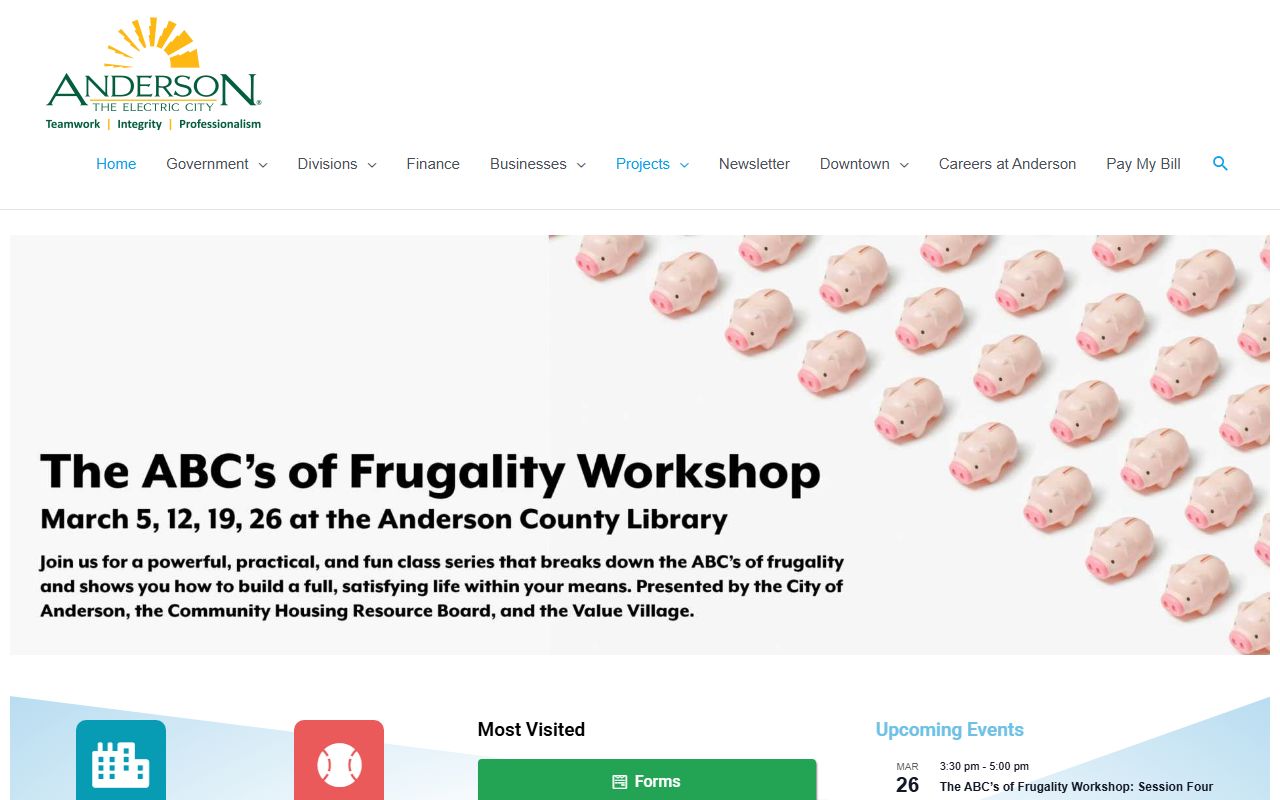
The city website does not maintain court records or family law information. For divorce records, residents should contact the Anderson County Family Court directly.
The Anderson County Clerk of Court is the official custodian of all divorce case files in the county. Their office processes requests for certified copies, file reviews, and case lookups.
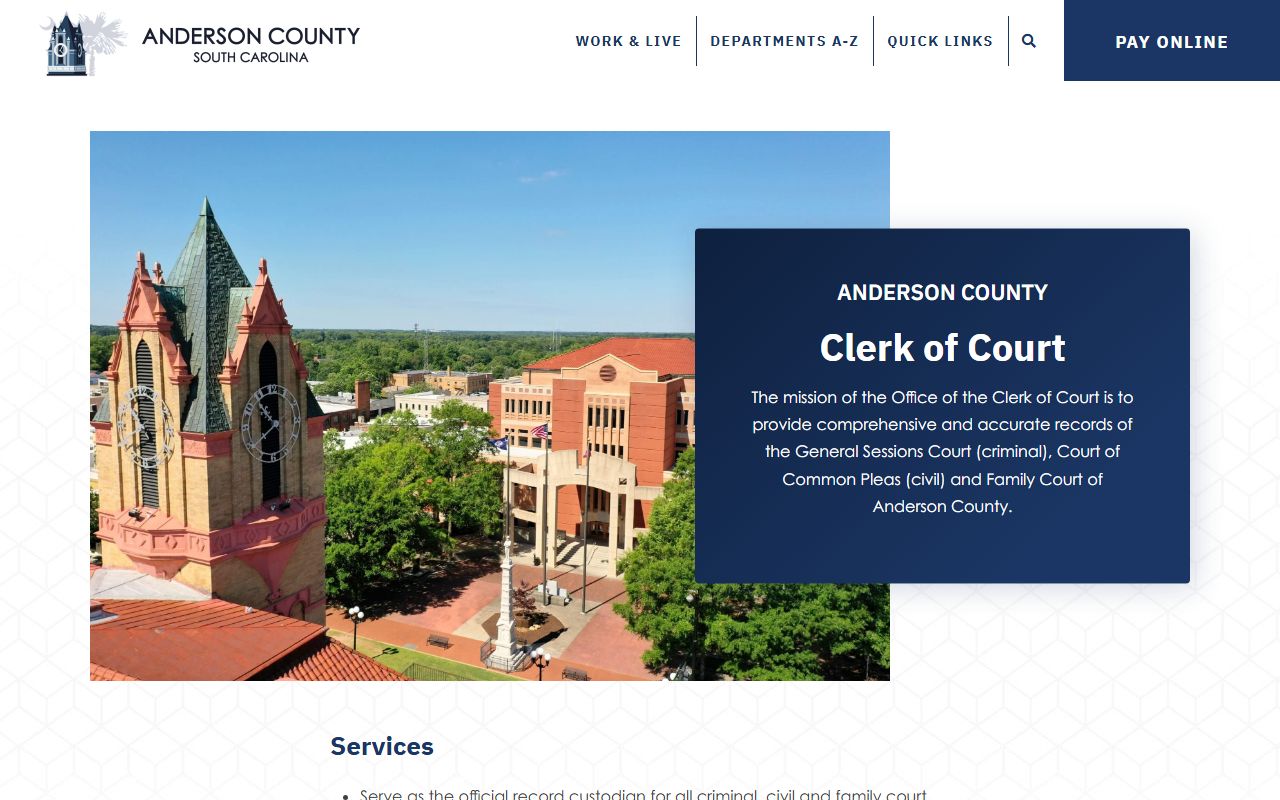
The Anderson County Clerk of Court at 100 South Main Street is the primary in-person resource for Anderson divorce record requests, file access, and certified copy orders.
Residency and Venue for Anderson County Divorce Filings
South Carolina law sets clear residency requirements before a divorce can be filed. Under S.C. Code Ann. § 20-3-30, if both spouses are South Carolina residents, the filing spouse must have lived in the state for at least three months before filing. If only one spouse lives in South Carolina, that residency period extends to one full year. Anderson residents who have lived in the city for the required period and whose spouse also resides in South Carolina can file at the 10th Judicial Circuit Family Court without delay.
Venue rules under S.C. Code Ann. § 20-3-60 determine which county court handles the case. The rule is to file in the county where the defendant lives. If the defendant has left South Carolina entirely, the plaintiff files in their own county of residence. For most Anderson residents, this means Anderson County Family Court is the correct venue. Since the court is located in Anderson city at 100 South Main Street, the filing process is straightforward for local residents.
Grounds for Divorce in Anderson County
Five grounds for divorce exist under S.C. Code Ann. § 20-3-10. One year of continuous separation is the no-fault ground and represents the majority of filings in Anderson County. The parties must live separately for twelve full months. No fault needs to be assigned to either party. Many Anderson residents choose this ground because it is straightforward, reduces conflict, and is easier to prove.
Fault-based grounds remain available and sometimes strategically important. The four fault grounds are adultery, desertion for one year, physical cruelty, and habitual drunkenness or drug use. Each requires evidence and adds procedural complexity. Adultery is particularly significant because South Carolina law bars an adulterous spouse from receiving alimony. If a fault ground is asserted, the case typically takes longer and costs more to resolve.
South Carolina imposes a mandatory waiting period regardless of which ground is used. A judge cannot refer a case for final decree consideration until two months after the initial filing date. The final decree itself cannot be issued until at least three months after filing. This floor applies to all Anderson County cases without exception.
Equitable Distribution of Property in Anderson Divorces
When an Anderson divorce involves shared property, the court applies South Carolina's equitable distribution standard. Under S.C. Code Ann. § 20-3-620, marital property is divided in a way that is fair given all the circumstances, but not automatically split fifty-fifty. The Anderson County Family Court weighs the length of the marriage, each spouse's financial contribution to the household, the value of separate property each party holds, and the economic position each party will be in after the divorce.
Marital property includes most assets acquired during the marriage regardless of which spouse's name they are in. Retirement accounts, equity in a shared home, and jointly owned vehicles are common examples. Separate property, such as assets owned before the marriage or inherited during it, is generally excluded from the division calculation. The final property division order is part of the case record filed with the Anderson County Clerk of Court.
Note: Property settlement agreements negotiated between the parties can be incorporated into the final order. If the parties reach their own agreement, it still requires court approval and becomes part of the public case file once entered.
Public Records Access Under South Carolina FOIA
South Carolina's Freedom of Information Act at S.C. Code Ann. § 30-4-10 establishes a strong presumption that government records are open to the public. Anderson County divorce case files fall under this framework. Any member of the public can request access to most divorce records through the Anderson County Clerk of Court. You do not need to be a party to the case, and you do not need to provide a reason for the request in most instances.
Sealed records are an exception. Cases involving minor children may have certain financial documents or parenting evaluations that are restricted. Domestic violence protective orders can also limit public access to portions of a file. If a record you need has been sealed, you can file a motion asking the court to unseal it and explain your need. A judge will review the request and decide.
Anderson residents who need legal help with the divorce process or records access can contact SC Legal Services for free assistance if they meet income guidelines. The South Carolina Bar Lawyer Referral Service at (803) 799-6653 connects callers with private family law attorneys serving Anderson County. Court forms, including the Final Order form SCCA299, are available through sccourts.org/court-forms/.
Anderson County Divorce Records
All Anderson divorce records are held at the Anderson County Family Court at 100 South Main Street in Anderson. Because Anderson is the county seat, the Clerk of Court and Family Court are both within the city. For a full overview of Anderson County's divorce records system, available resources, and court contact information, visit the county page below.
Nearby South Carolina Cities
Anderson is in the Upstate region of South Carolina and is within driving distance of several other cities. If you are looking for divorce records connected to a nearby community, the links below will take you to those city guides.