
Search South Carolina Divorce Records
South Carolina divorce records are public documents maintained by the Family Court in each of the 46 counties and by SC DHEC, Division of Vital Records. County Family Courts hold the complete case files including the complaint for divorce, the answer, and the final divorce decree. The state vital records office keeps divorce certificates dating back to 1962. You can search these records online, by mail, or in person at courthouses throughout South Carolina.
South Carolina Divorce Records Quick Facts
Where to Find South Carolina Divorce Records
South Carolina has two main sources for divorce records. The Family Court in each county stores the full case files for every divorce granted in that jurisdiction. These files include the complaint for divorce, the answer from the other spouse, any settlement agreements, and the final divorce decree signed by the judge. The Clerk of Court in each county keeps these records and can supply copies. You can visit the courthouse in person or look up some case information through the South Carolina Judicial Branch website at sccourts.org.
SC DHEC, Division of Vital Records maintains divorce certificates statewide. A certified copy of the divorce record from the state confirms that a divorce took place and includes basic details: the names of both spouses, the date of the decree, and the county where it was entered. The Division of Vital Records holds records for divorces from 1962 to the present. You can order certified copies online, by mail, or in person at their Columbia office. Certified copies cost $12 in South Carolina.
The SC Department of Public Health divorce reports page explains what records are available and how to order a certified copy.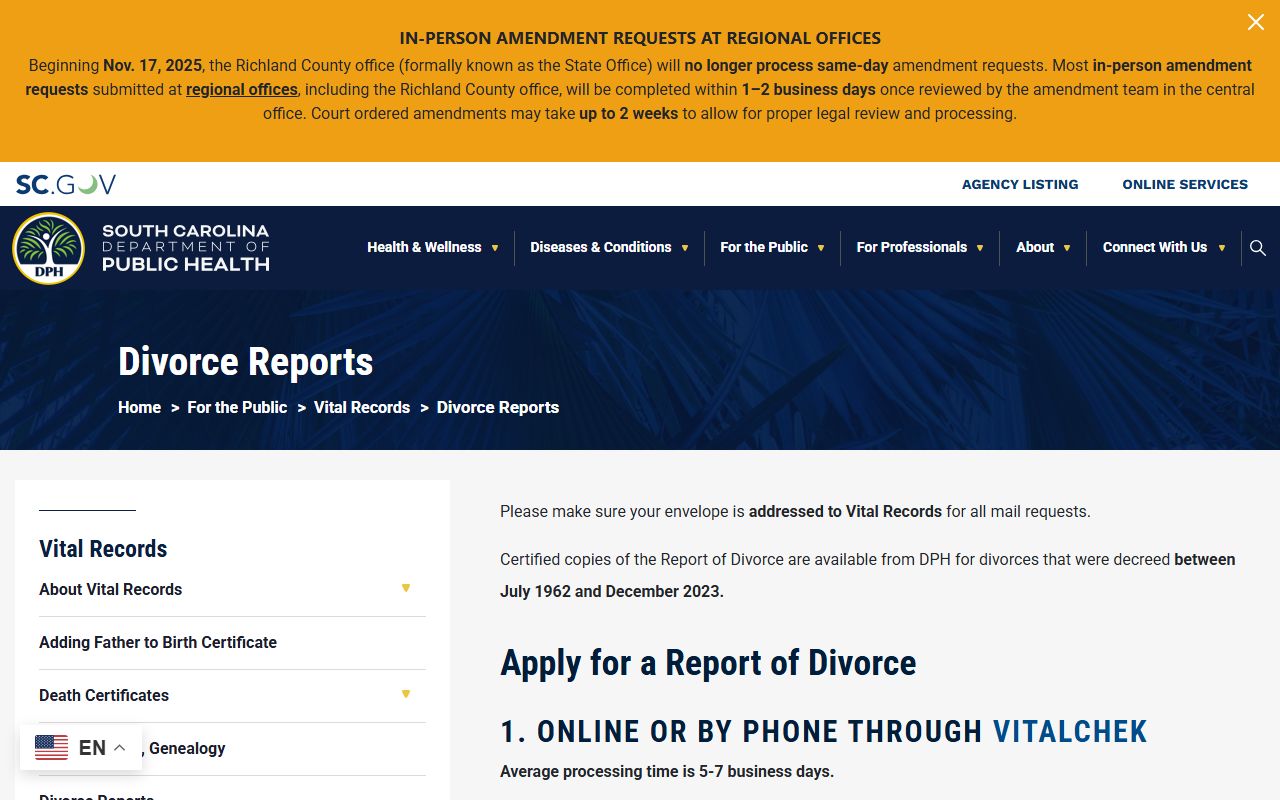 Divorce certificates from DPH are available for South Carolina divorces from July 1962 through December 2023.
Note: Divorce certificates from the Division of Vital Records contain less detail than full court records from the Clerk of Court in South Carolina.
How to Search Divorce Records in South Carolina
South Carolina provides multiple ways to look up divorce records. Online access is the fastest option for most searches. You can search from home at any hour. In-person visits work best when you need certified copies or want to examine the complete case file. Both options are available to anyone in South Carolina.
The South Carolina Judicial Branch Public Index gives access to Family Court records across all 46 counties in South Carolina. You can search by party name or case number to locate divorce cases. The system is free to search, and you can view case information including party names, filing dates, and case status. For copies of actual documents, you need to contact the county Clerk of Court or visit the courthouse. Go to sccourts.org to begin your search in South Carolina.
The SC Judicial Branch at sccourts.org provides the free Public Index for searching divorce and other court records statewide.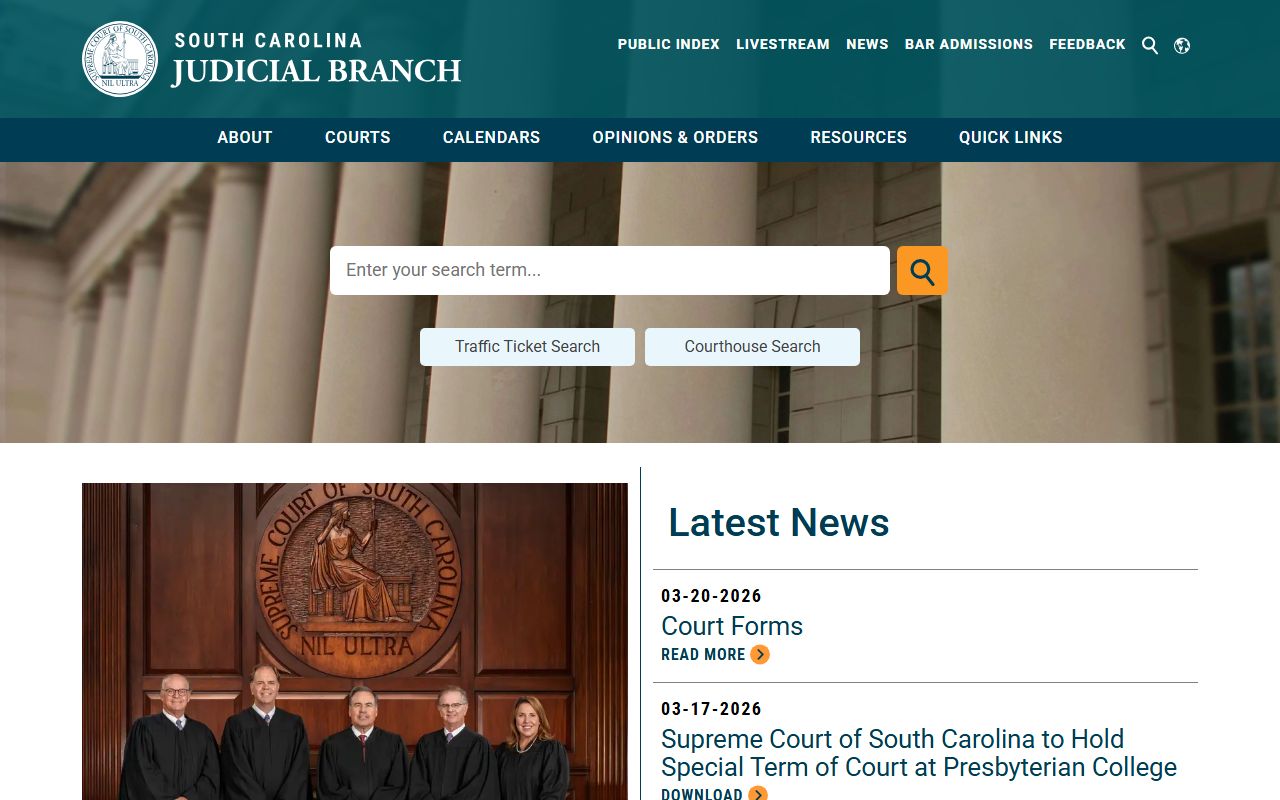 The Public Index covers all 46 counties and lets you search by party name or case number at no charge.
To search divorce records through the Public Index, you need the following:
- Full name of at least one spouse
- Approximate date of the divorce filing
- County where the case was filed
You can also search in person at any Clerk of Court office in South Carolina. Go to the county where the divorce was filed. Staff can help you locate records and provide copies. Most Clerk of Court offices charge a per-page fee for copies, and certified copies cost more than plain ones. For divorce certificates from the state, submit your request to SC DHEC, Division of Vital Records, 2600 Bull Street, Columbia, SC 29201. Rush processing is available for an additional fee in South Carolina.
Types of Divorce Records in South Carolina
South Carolina divorce records include several categories of documents. The divorce decree is the final court order that ends a marriage. A judge signs this after the case is resolved. The decree states the marriage is dissolved and typically addresses property division, spousal support, and custody arrangements. This is the most thorough divorce record available in South Carolina. It comes from the Clerk of Court in the county where the case was heard.
The divorce certificate is a shorter document from SC DHEC, Division of Vital Records. A certificate verifies that a divorce took place but does not spell out the terms of the settlement. Many people need a certificate for purposes like changing their name, remarrying, or updating other legal documents in South Carolina. You can get a certificate online, by mail, or in person from the Division of Vital Records in Columbia.
Divorce records in South Carolina typically contain the following:
- Full legal names of both spouses
- Date and place of the marriage
- Date the complaint for divorce was filed
- Date the divorce was finalized
- County and court where it was heard
- Grounds cited for the divorce
- Terms of property division if included
Court case files may also contain motions, affidavits, and other papers filed during the proceedings. These show the full history of the divorce case in South Carolina. You can get copies of any document in a case file from the Clerk of Court.
South Carolina Divorce Laws and Rules
South Carolina law governs the rules for obtaining a divorce. These laws determine how long the process takes and what records are generated. The South Carolina General Assembly has established specific rules for residency, grounds, property division, and support. You must follow these rules to file for divorce in South Carolina.
Under S.C. Code Ann. § 20-3-30, at least one spouse must have been a resident of South Carolina for at least one year before filing for divorce. If both spouses are residents, only three months of residency is required. You file in the county where either spouse resides. South Carolina does not have a general waiting period between filing and the earliest the decree can be entered, though no-fault divorces require one year of continuous separation before filing.
South Carolina allows both no-fault and fault-based divorces. Under S.C. Code Ann. § 20-3-10, no-fault divorce is available on one ground: the spouses have lived separate and apart without cohabitation for one year. Fault grounds include adultery, physical cruelty, habitual drunkenness or narcotics use, and desertion for a period of one year. For fault-based divorces, there is no mandatory separation period before filing. Property division, spousal support, and child custody are addressed within the same case in South Carolina.
For no-fault divorces, the spouses must prove they have lived separate and apart for at least one continuous year before filing. There is no mutual consent option that shortens this period in South Carolina. The court may issue temporary orders for child custody, support, or use of marital property while the case is pending in South Carolina.
South Carolina is an equitable distribution state for property division. Under S.C. Code Ann. § 20-3-620, the court divides marital property in a manner that is equitable and fair. The judge considers factors including the length of the marriage, each spouse's contributions, and the economic circumstances of each party. South Carolina courts divide marital assets based on what is fair and just, which does not necessarily mean an equal split.
The SC Courts court forms page provides all official forms needed to file for divorce in South Carolina at no charge.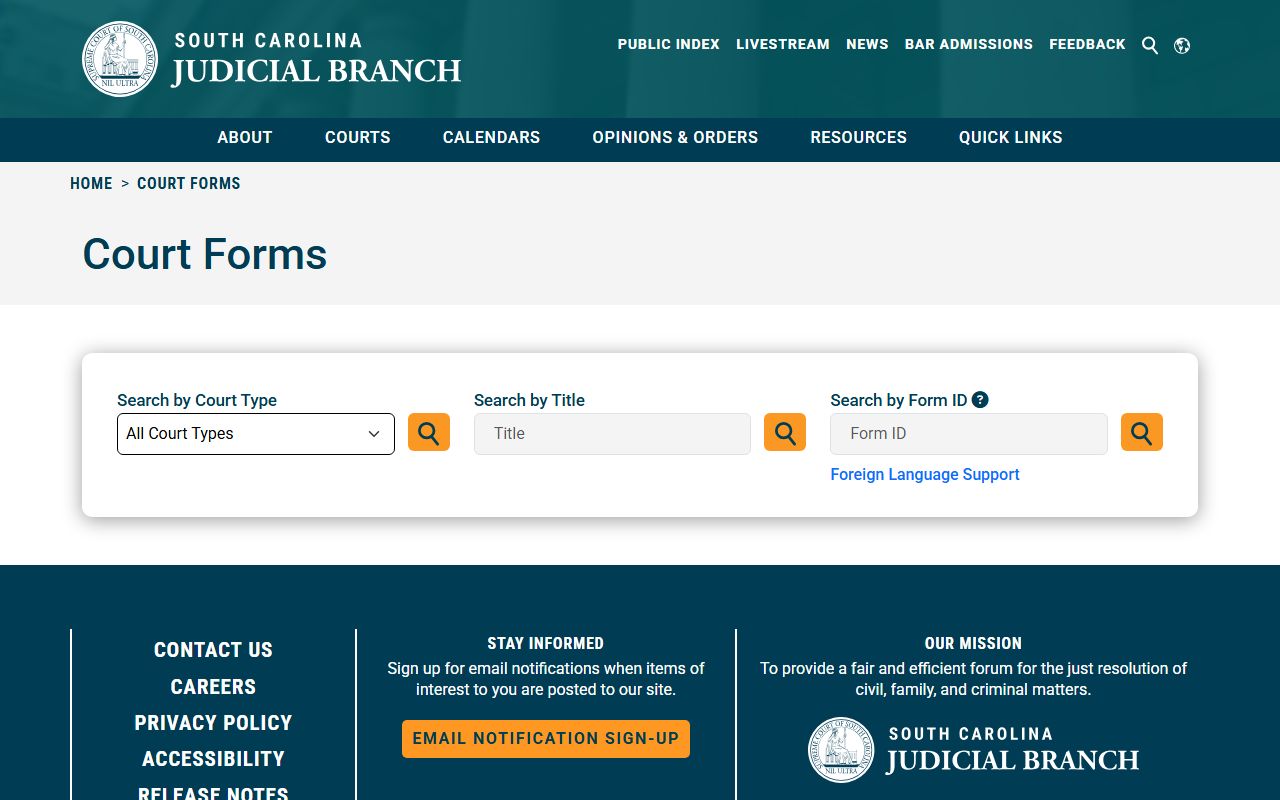 All forms needed for a South Carolina divorce, including the complaint and final order, are available free through the SC Judicial Branch.
Divorce Record Fees in South Carolina
Fees vary depending on what you need and where you obtain it in South Carolina. SC DHEC, Division of Vital Records charges $12 for a certified copy of a divorce certificate. Rush processing is available for an extra fee. Online orders can be placed through the VitalChek website.
Family Courts charge their own fees for divorce cases and records in South Carolina. Filing a complaint for divorce costs approximately $150 depending on the county. Getting copies of existing divorce records costs less. Most Clerk of Court offices charge per page for copies. Certified copies cost more than plain ones at any court in South Carolina.
Fee waivers are available for people who cannot afford the filing fees in South Carolina. You can apply by completing an Affidavit and Application to Proceed In Forma Pauperis. You must demonstrate financial hardship, such as receiving public assistance or having income below the federal poverty guidelines. The court will review your application and determine if you qualify for a fee waiver in South Carolina.
Note: Filing fees and copy fees can change, so contact the court or agency to confirm current costs in South Carolina.
How to Get Copies of South Carolina Divorce Records
You can get copies of divorce records in South Carolina through several channels. For divorce certificates from the Division of Vital Records, you have three main options. First, order online through the VitalChek website, which is the fastest method. Second, mail your request to SC DHEC, Division of Vital Records, 2600 Bull Street, Columbia, SC 29201 with the names of both spouses, the date of the divorce, the county, and your payment. Third, visit the office in person in Columbia where walk-in service is available during business hours in South Carolina.
For full divorce decrees and case files, go to the Clerk of Court in the county where the divorce was filed in South Carolina. You can request copies in person or call ahead to find out what you need. Some courts accept mail requests for copies. You will need to know the names of the parties or the case number. The Clerk of Court can search the records and provide copies for a fee in South Carolina.
Wait times vary by method and location in South Carolina. Online orders through VitalChek are typically processed within a few business days. Mail requests to the state take several weeks. Court record requests depend on the workload at that county's Clerk of Court office in South Carolina.
Legal Help for Divorce in South Carolina
Several organizations offer help with divorce cases in South Carolina. South Carolina Legal Services provides free legal assistance to people with low income. They handle family law cases including divorce across the state. Visit their website at sclegal.org to find legal help resources and locate services in your area for divorce in South Carolina.
The SC Courts Clerks of Court directory lists contact details for every county Clerk of Court in South Carolina.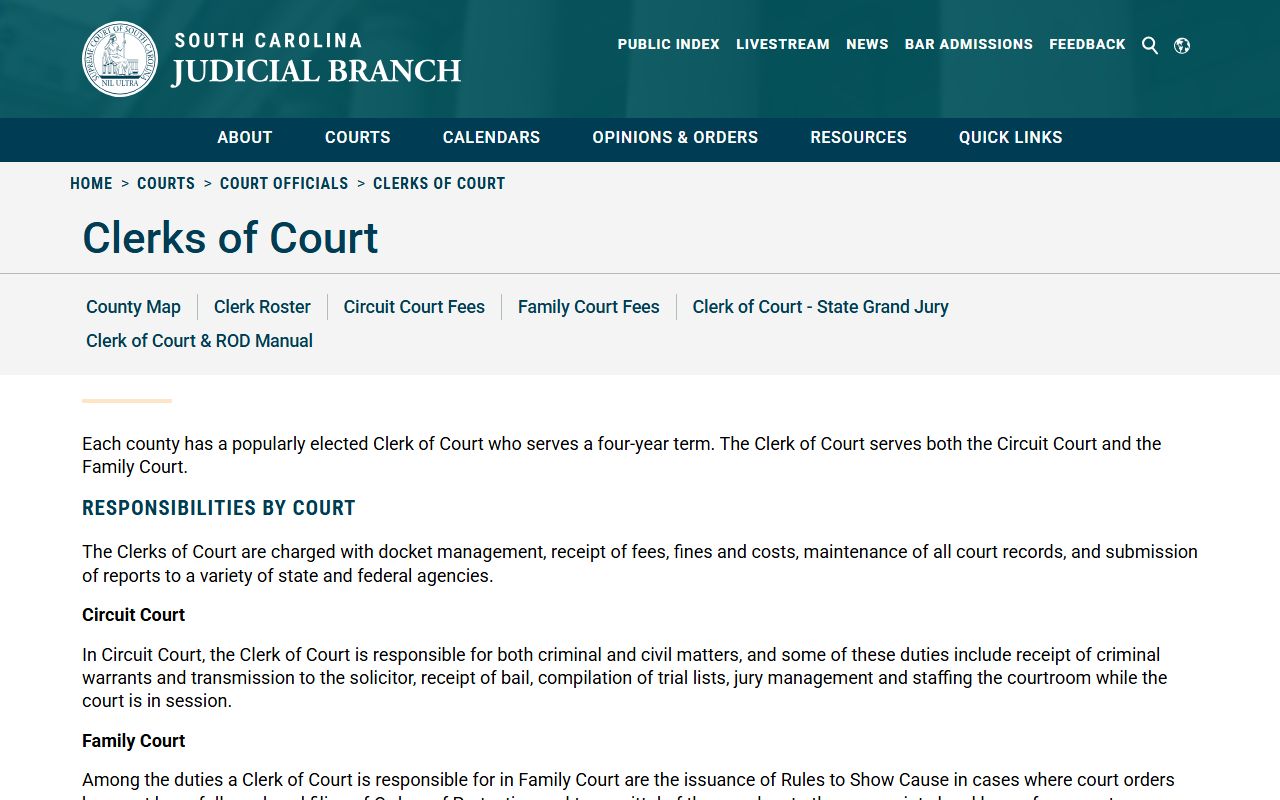 The directory is a quick way to find the right county office when you need to request divorce records in South Carolina.
The South Carolina Bar runs a lawyer referral service for people who need an attorney in South Carolina. Call (803) 799-6653 to get connected with a family law lawyer. They can match you with an attorney in your area who handles divorce cases in South Carolina.
The South Carolina Judicial Branch at sccourts.org offers forms and instructions for people who want to file on their own. You can find step-by-step guides for handling your own divorce case in South Carolina. The site also has links to legal resources across the state. The court system provides all the official forms you need to file for divorce in South Carolina, including the complaint, answer, and other required papers.
Are Divorce Records Public in South Carolina
Yes, divorce records are generally public in South Carolina. Under the South Carolina Freedom of Information Act, S.C. Code Ann. § 30-4-10 et seq., the public has the right to inspect government records. This applies to divorce records held by the courts. You do not have to be one of the parties in the case. The records are available to anyone who requests them in South Carolina.
Some restrictions apply to what you can see in divorce records in South Carolina. Certain details may be redacted from public copies. These include Social Security numbers, financial account numbers, and information about minor children. A party can also ask the court to seal specific documents in their divorce case. A judge may seal records if the person shows good cause. Sealed divorce records are uncommon in South Carolina.
Note: Divorce certificates from the Division of Vital Records may have some access restrictions, but court records at the Clerk of Court offices are generally open to the public in South Carolina.
Browse South Carolina Divorce Records by County
Each county in South Carolina has its own Family Court that keeps divorce records. Pick a county below to find local contact info and resources for divorce records in that area.
Divorce Records in Major South Carolina Cities
Residents of major cities file for divorce at their county courthouse. Pick a city below to learn about divorce records in that area.