
Anderson County Divorce Records
Anderson County divorce records are maintained by the Clerk of Court at the Anderson County Family Court in Anderson, South Carolina. With a population of approximately 210,000, Anderson County is one of the larger counties in the state and part of the 10th Judicial Circuit. The Family Court holds sole authority over divorce, annulment, legal separation, custody, support, alimony, and property division cases. Anderson County divorce records are available through the ACPASS Public Records Index online, through the SC Judicial Branch case search, or in person at the courthouse at 100 South Main Street. This guide walks through each option and explains what to expect.
Anderson County Quick Facts
Anderson County Family Court Overview
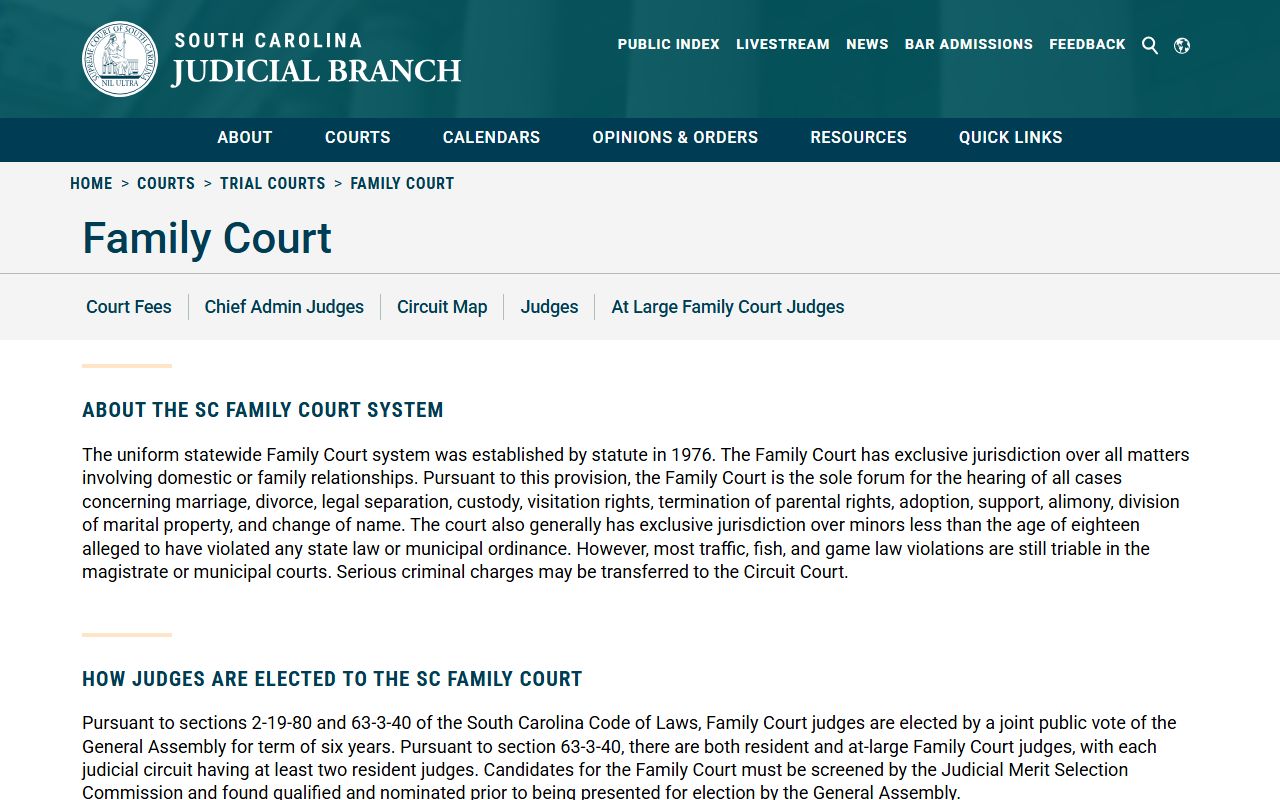
South Carolina's Family Court system was established in 1976 and gave each county a dedicated court for domestic relations matters. The Anderson County Family Court is the sole forum for annulment, divorce, legal separation, custody, visitation, termination of parental rights, adoption, support, alimony, property division, and name changes. All cases proceed under SC Code Title 20. The court operates as part of the 10th Judicial Circuit.
The Clerk of Court at 100 South Main Street is the record keeper for all Family Court cases in Anderson County. The clerk's office manages new filings, case files, and copy requests. Family Court staff cannot provide legal advice to parties involved in active or pending cases.
| Court | Anderson County Family Court 100 South Main Street, Anderson, SC 29624 Phone: (864) 260-4055 |
|---|---|
| Hours | Monday through Friday, 8:30 AM to 5:00 PM |
| Website | andersoncountysc.org |
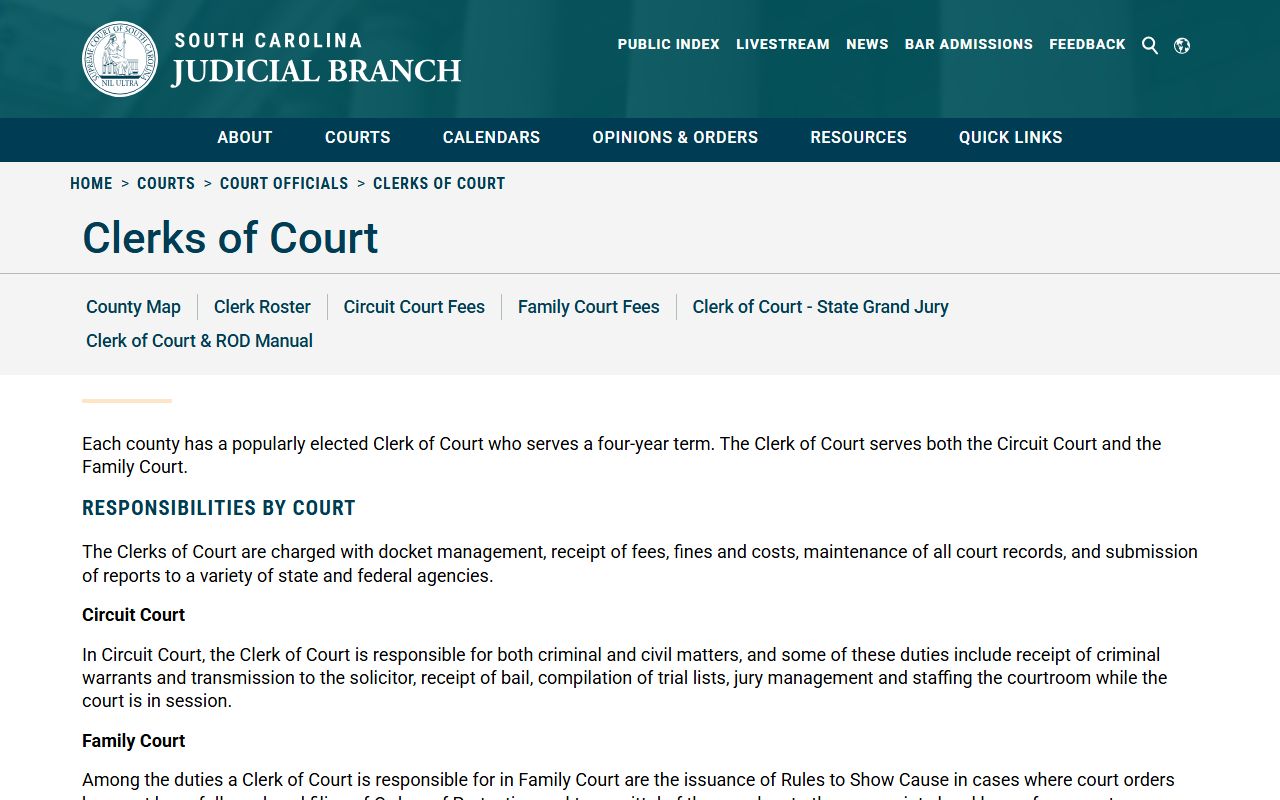 The statewide clerks directory is a reliable reference when you need to confirm office hours, addresses, or contact information for the Anderson County Clerk of Court.
How to Search Anderson County Divorce Filings
Anderson County offers the ACPASS Public Records Index, a local tool for searching court records. ACPASS provides case-level information for Family Court filings in the county. You can search by name or case number to find basic case details including filing date, parties, and case status.
The SC Judicial Branch also provides a statewide case search at sccourts.org. This free tool covers Anderson County and all other counties. It shows case numbers, party names, and disposition details but does not display full document text.
For in-person searches, visit the Clerk of Court at 100 South Main Street during business hours. Bring a photo ID and know the full names of both parties along with an approximate filing year if you can. Staff can pull case files and confirm what documents are available. For older records not available through the online index, in-person or written requests to the clerk's office are the best option.
Note: Home addresses were removed from the public court index beginning January 1, 2026, as part of a statewide privacy update.
Grounds, Residency, and Venue for Anderson County
South Carolina recognizes both fault-based and no-fault grounds for divorce under SC Code § 20-3-10. Fault grounds include adultery, desertion for one year, physical cruelty, and habitual drunkenness or drug use. The no-fault ground is one continuous year of living separate and apart. The majority of Anderson County divorce filings use this no-fault separation ground.
Residency requirements are set by § 20-3-30. If both parties are South Carolina residents, either may file after three months of residency in the state. When only one spouse lives in South Carolina, that spouse must have been a resident for at least one year before filing.
The venue rule under § 20-3-60 requires that a divorce petition be filed in the county where the defendant lives. If the defendant lives out of state, the plaintiff may file in their own county of residence. This places most cases for Anderson County residents in the Anderson County Family Court when the responding party lives locally.
Property matters are handled under § 20-3-620, which calls for equitable distribution of marital assets. South Carolina courts divide marital property fairly based on factors like the length of the marriage, each spouse's financial situation, and contributions to shared property. This does not always result in an equal 50/50 split.
Documents Found in Anderson County Divorce Records
An Anderson County divorce file can contain many types of documents depending on how the case was resolved. Every case begins with a summons and complaint that sets out the grounds for divorce and the relief requested. From there, records may include an answer or notice of default, temporary orders, financial declarations, motions, and hearing transcripts.
The SC Judicial Branch maintains standard forms for divorce proceedings across all counties. The image below comes from the SC Family Court information page.
When a case concludes, the court issues a final divorce decree on form SCCA299. This is the official order that ends the marriage. It is the document most often needed for remarriage, name changes, insurance updates, and other legal purposes. Certified copies of the SCCA299 are available from the Anderson County Clerk of Court.
Cases with children will also contain parenting plans, custody orders, and support worksheets. Property division cases may add deeds, affidavits, and settlement agreements to the file.
Filing Fees and Copy Costs in Anderson County
Filing a divorce petition in Anderson County costs approximately $150. This is the base filing fee charged at the Clerk of Court. Extra fees apply for service of process, motions, and other filings made during a contested case. Fee amounts are set by South Carolina court rules.
Copies of divorce records cost a per-page fee plus a certification charge if a certified copy is needed. The clerk's office at (864) 260-4055 can give you the current rate schedule. Residents who cannot afford these fees may apply for a waiver. Waiver forms are available at the courthouse or through the SC court forms portal at sccourts.org/court-forms.
Divorce Reports from SC DPH
South Carolina's Division of Public Health holds statistical divorce reports that are different from the actual court decree. DPH maintains reports for divorces granted between July 1962 and December 2023. These can be ordered directly from the DPH vital records page or through VitalChek for $12 per certified copy.
The DPH office is located at 2600 Bull Street in Columbia. For actual Anderson County divorce decrees, only the Clerk of Court where the divorce was granted holds the official court file. DPH reports confirm that a divorce occurred but do not replace the court-issued decree. For divorces after December 2023, contact the Anderson County Clerk of Court directly.
The image below is sourced from the SC Judicial Branch case records portal and shows how statewide court records are indexed online.
Note: No South Carolina divorce records exist before April 1949. Divorce was illegal in the state until that date.
Public Records and FOIA Access
Anderson County divorce records are public under South Carolina's Freedom of Information Act at SC Code § 30-4-10. Most case documents, including petitions, motions, and decrees, are available to any person who requests them. Records sealed by a judge or those involving protected parties are an exception and require a court order to access.
The SC law reference site at law.justia.com provides a free searchable version of Title 20, which covers divorce law in full. Researchers and attorneys use this resource to review the statutes that govern Anderson County Family Court proceedings.
Legal Help for Anderson County Divorce Cases
Divorce cases in South Carolina can involve complex issues around property, alimony, and child custody. SC law at § 20-3-130 recognizes six types of alimony, and § 20-3-620 guides how property is divided. Understanding how these rules apply to your case takes legal knowledge that court staff cannot provide.
Free legal help is available through SC Legal Services for residents who qualify based on income. The SC Legal Services helpline for Anderson County residents is 1-888-346-5592. For paid legal representation, the South Carolina Bar can be reached at (803) 799-6653 for a lawyer referral. Self-represented filers can find standard divorce forms on the SC Judicial Branch website at sccourts.org/court-forms.
Genealogical researchers working with older Anderson County records may also find the Library of Congress South Carolina vital records guide useful at guides.loc.gov.
Cities in Anderson County
All divorce cases for Anderson County residents are filed and heard at the Anderson County Family Court, regardless of which city the parties live in within the county.
Nearby Counties
If a divorce was filed in a county bordering Anderson, the records would be held by that county's Clerk of Court. The links below cover neighboring counties in the Upstate region of South Carolina.