
Greenville County Divorce Court Records
Greenville County divorce records are maintained by the Clerk of Court at the Greenville County Courthouse in downtown Greenville. As the most populous county in South Carolina, Greenville sees a large volume of Family Court cases each year. These records document the legal end of a marriage and include the final decree, property settlement terms, and all related filings. Residents of Greenville, Greer, Mauldin, and Simpsonville all file their divorce cases here. The South Carolina Department of Public Health holds statewide divorce reports from 1962 onward as a separate certified record option. This page covers how to access, search, and request divorce records in Greenville County.
Greenville County Quick Facts
Greenville County Family Court
Greenville County is part of the 13th Judicial Circuit and is home to South Carolina's largest county by population. The Family Court here has handled all divorce and domestic relations matters since the court was formally established statewide in 1976. Before that year, divorce cases moved through the Court of Common Pleas. Today, the Family Court has sole authority over divorce filings, child custody, support orders, and alimony awards for all residents of Greenville County. No other court division can grant a divorce.
The Clerk of Court maintains every case file from the initial petition through the Final Order of Divorce. South Carolina uses form SCCA299 as the standard final divorce order. Files can include the summons and complaint, financial declarations, temporary orders, property agreements, and all post-decree modifications. Staff in the Clerk's office are available to help you locate and copy documents. They cannot give legal advice, but they can walk you through the process of finding a specific file.
The Greenville County Clerk of Court page lists current fees, hours, and contact information. The main Greenville County website also provides links to related departments and services.
| Court | Greenville County Family Court 301 University Ridge, Greenville, SC 29601 Phone: (864) 467-7140 |
|---|---|
| Hours | Monday through Friday, 8:30 AM to 5:00 PM |
| Website | greenvillecounty.org |
The SC Courts Clerks of Court directory lists contact details for all 46 South Carolina counties.
The Greenville County portal provides access to court services, including the Clerk of Court division that handles divorce record requests for county residents.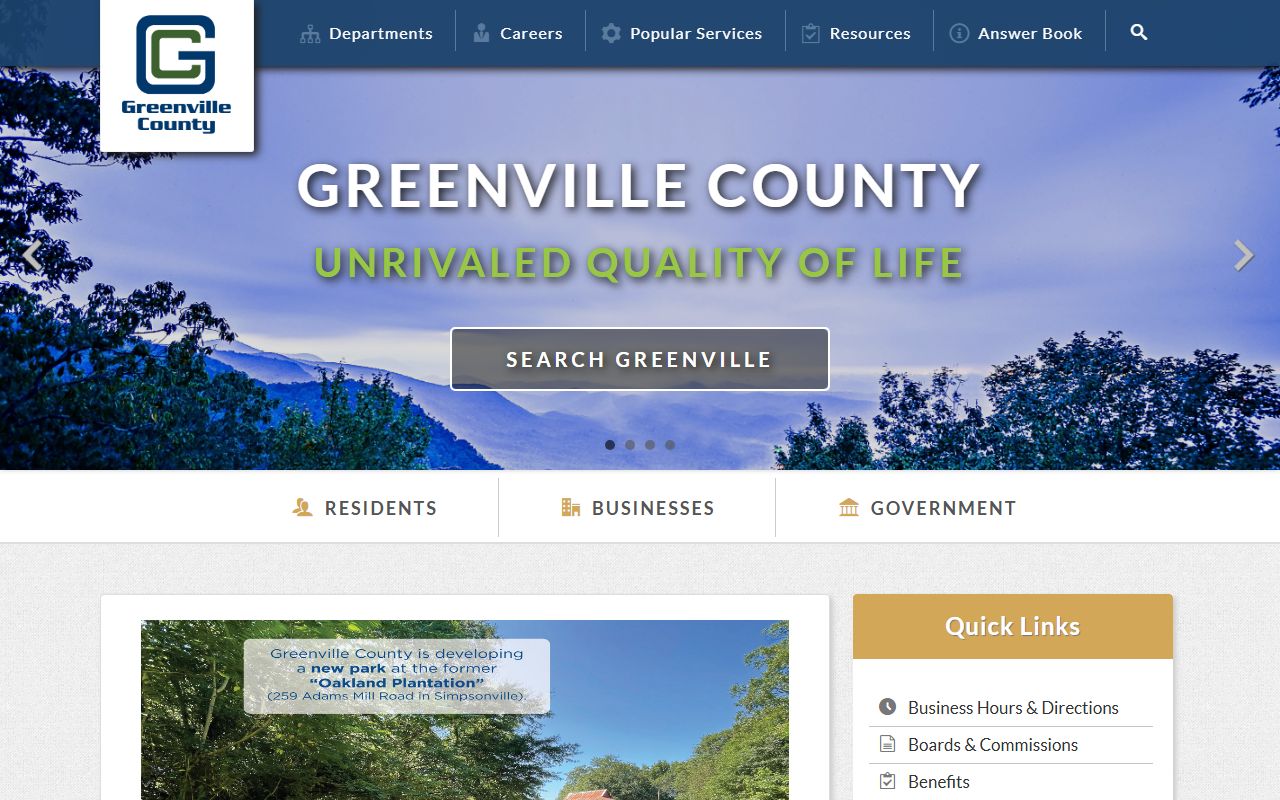 The county portal is your starting point for confirming office locations, hours, and fee schedules before making a records request at the Greenville County Family Court.
How to Search Greenville Divorce Records
The South Carolina Judicial Branch operates a free online Public Index at sccourts.org. You can search Greenville County Family Court cases by party name, case number, or filing date range. The index shows case-level information and docket entries. It does not display full document images. For actual copies of filings, you need to contact the Greenville County Clerk of Court directly or visit the courthouse in person.
When searching in person, bring the full legal names of both parties as they appeared at the time of the divorce. An approximate filing year helps significantly. Case numbers speed up the search even more. The Clerk's staff can pull records from both paper archives and the electronic system. As of January 1, 2026, home addresses have been removed from the public index statewide, so those will not appear in search results. All other basic case data, including names, case numbers, and filing dates, remains public.
Greenville is a high-volume court. Having as much identifying information as possible saves time on both sides of the counter. If you are searching for a record from before the Family Court was established in 1976, the case may be in the Court of Common Pleas archives instead.
Divorce Filing Fees and Copy Costs
The base filing fee for a divorce petition in Greenville County is approximately $150. This covers the initial case opening and the summons. Additional fees apply for serving documents on the other party, filing amended pleadings, and requesting certified copies. The Clerk's office can provide the current fee schedule by phone or at the counter.
Certified copies of the Final Order of Divorce cost a per-page copy fee plus a certification charge. Standard South Carolina Family Court copy rates run a few dollars per page. If you need multiple certified copies for property transfers, name change purposes, or legal proceedings in another state, plan to pay for each one separately. Ask the Clerk how many certified copies you are likely to need before you finalize your request.
Fee waivers are available for those who qualify. Ask the Clerk about an affidavit of indigency, sometimes called an in forma pauperis petition. The court reviews these requests case by case and may waive some or all costs for qualifying parties. Confirm current rates before submitting payment, as amounts can change.
Filing for Divorce in Greenville County
South Carolina law defines both the grounds and the residency requirements for divorce. Under S.C. Code Ann. § 20-3-10, recognized grounds include adultery, desertion for at least one year, physical cruelty, habitual drunkenness or drug use, and one year of continuous separation. Separation is the no-fault ground and is by far the most common basis for divorce across South Carolina, including Greenville County.
Residency matters. Under § 20-3-30, if only one spouse lives in South Carolina, that person must have been a resident for at least one year before filing. If both spouses are South Carolina residents at the time of filing, the residency requirement drops to three months. Greenville County residents who satisfy this rule may file at the courthouse on University Ridge.
Venue is governed by § 20-3-60. As a general rule, a divorce case should be filed in the county where the defendant lives. If the defendant resides out of state, the plaintiff may file in their own county of residence. South Carolina also imposes a waiting period: no case can be referred before two months after filing, and the final decree cannot be entered before three months have passed from the date of filing. The SC Courts forms page provides the official self-help packet forms to begin a case in Family Court.
What Greenville Divorce Records Contain
The contents of a Greenville County divorce case file vary depending on how contested the case was. A straightforward no-fault divorce with no property and no minor children tends to produce a slim file. A contested divorce involving real estate, retirement accounts, business interests, or child custody can run to dozens of documents or more.
A typical Greenville County divorce file includes the summons and complaint, proof of service, financial declarations from both parties, any temporary orders entered during the case, a property settlement agreement if one was reached, the Final Order of Divorce on form SCCA299, and any post-decree modification orders. Equitable distribution of property is governed by § 20-3-620, which means the court divides assets and debts in a way it finds fair, not necessarily a 50-50 split. Alimony, governed by § 20-3-130, may also appear in the file if one party was awarded support.
Sealed documents do exist. If the court entered a sealing order, those portions of the file are not accessible to the general public. The Clerk's staff can tell you whether a particular file contains sealed materials.
Divorce Reports from South Carolina DPH
The South Carolina Department of Public Health maintains statewide divorce reports covering July 1962 through December 2023. A DPH divorce report is a certified summary document. It confirms that a divorce occurred, identifies the parties, and states the date. It does not contain the full terms of the settlement, custody arrangements, or property division.
The DPH divorce reports page explains what is available and how to submit a request. The fee for a certified copy from DPH is $12. You can also order through VitalChek for an added service fee. For divorces finalized before July 1962, only the Clerk of Court in the county where the case was filed holds any record. If you need an apostille on a divorce record, the SC Secretary of State handles certification requests.
The SC DPH vital records portal is where to request a certified divorce report for Greenville County divorces recorded between July 1962 and December 2023.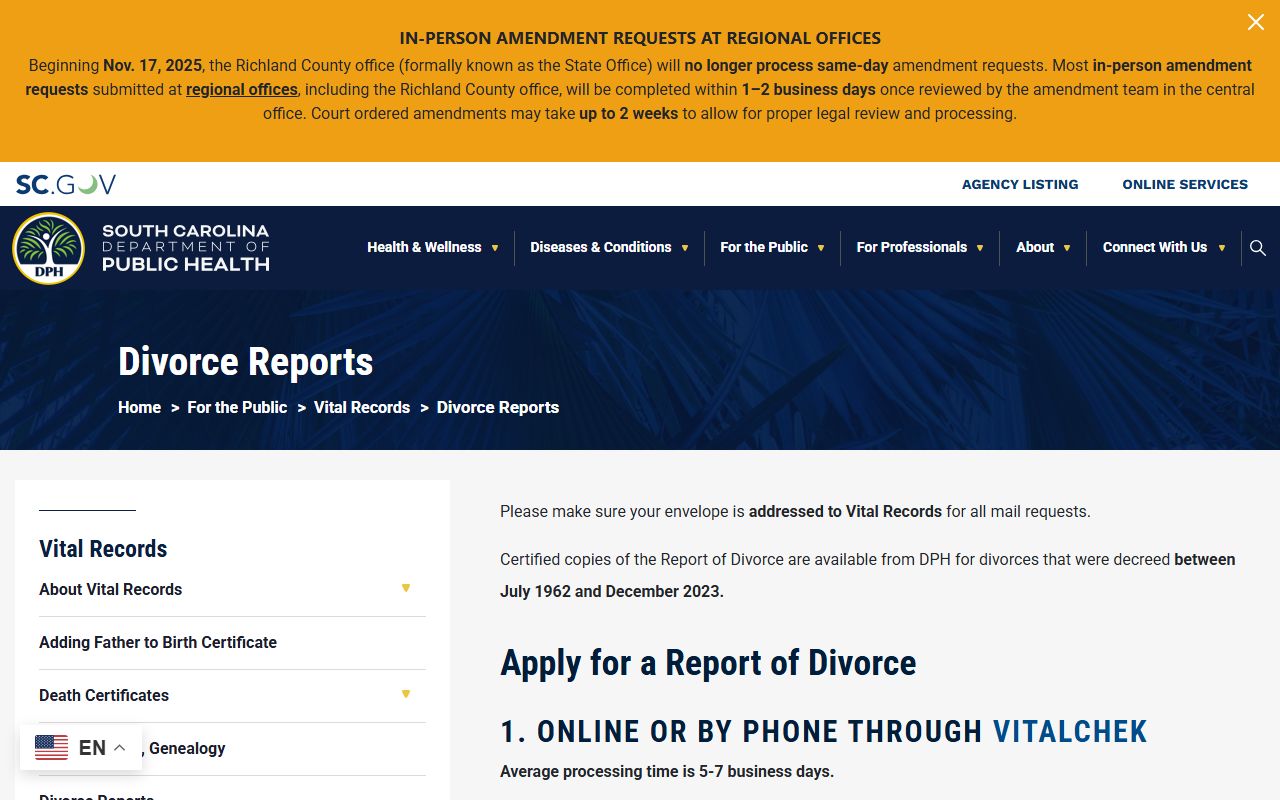 A DPH certified divorce report and the court's Final Order of Divorce serve different legal purposes. Confirm which one you need before placing your order.
Legal Help for Greenville County Residents
Divorce cases vary widely in complexity. A no-fault uncontested divorce with no children and minimal property can sometimes be handled without an attorney using the self-help packet forms at SC Courts. Cases involving minor children, disagreements about property or debt, or requests for alimony are generally better handled with professional legal guidance.
SC Legal Services provides free civil legal help to income-qualifying residents across South Carolina, including Greenville County. If you meet the income guidelines, their attorneys can assist with divorce petitions, answer questions about your rights, and help prepare documents. The SC Bar Lawyer Referral Service at (803) 799-6653 can connect you with a private family law attorney in the Greenville area if you prefer to hire private counsel.
Greenville County also has a self-help center available through the courthouse that can point unrepresented parties to the right forms and procedures. Staff there cannot provide legal advice but can explain how the process works step by step.
Public Access to Greenville Divorce Records
South Carolina's Freedom of Information Act at S.C. Code Ann. § 30-4-10 and following sections establishes the public's right to access court records. Divorce files in Greenville County are generally public records. Any person may request copies from the Clerk of Court. There is no requirement to state a reason for the request. However, individual documents within a file may be sealed by court order, particularly where minor children are involved or where the court found good cause to protect sensitive financial information.
Since January 1, 2026, home addresses no longer appear in the public index statewide. This change was made to protect personal privacy. Party names, case numbers, filing dates, and the substance of court orders remain accessible. If you need older records going back to the 1950s or earlier, the historical archives at the Greenville County Courthouse may hold some pre-Family Court domestic case files in the Court of Common Pleas records. The Library of Congress South Carolina vital records guide is a useful resource for genealogy research involving older divorce records.
The SC Courts website provides the public index tool and general guidance on accessing Family Court case records statewide, including those from Greenville County.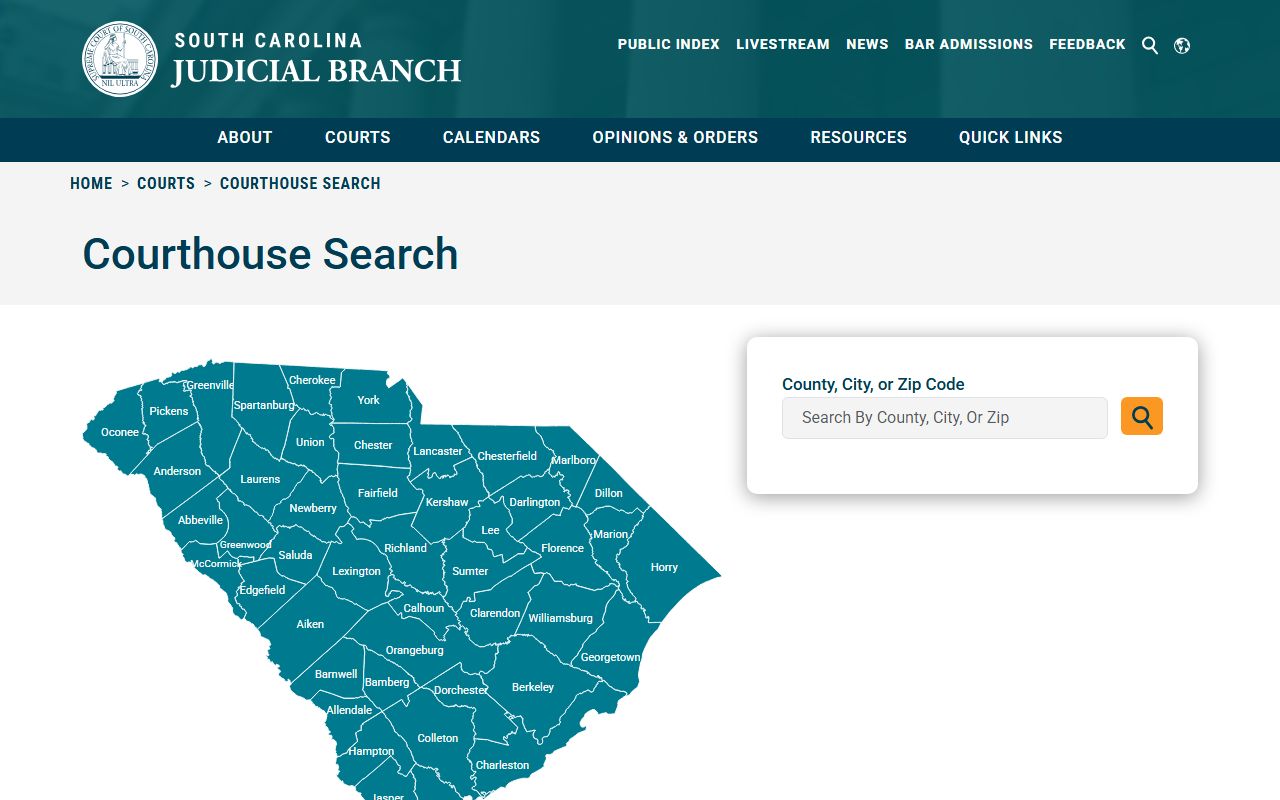 The statewide courts portal is a good first stop when searching for a Greenville County divorce case before visiting the courthouse in person.
Divorce History in South Carolina
South Carolina was the last state in the United States to permit divorce. Divorce was banned entirely in South Carolina until April 1949. Before that, residents who wanted to end a marriage had to seek help in other states or pursue an annulment. Because of this history, South Carolina divorce records are relatively recent compared to most other states.
The Family Court was established in 1976, creating a dedicated court division for all domestic relations matters including divorce. Before 1976, these cases were handled by the Court of Common Pleas. Today, the SC Family Court has exclusive jurisdiction over divorce statewide. In Greenville County, the Family Court operates as part of the 13th Judicial Circuit and processes more divorce filings than any other county in the state due to Greenville's large and growing population.
Cities in Greenville County
Divorce cases for residents of all cities and communities in Greenville County are filed at the Greenville County Family Court at 301 University Ridge in the city of Greenville.
Nearby Counties
Divorce records for residents of counties neighboring Greenville are held by their respective Family Court Clerk of Court offices. Each county maintains its own separate case files.