
Easley Divorce Records in Pickens County
Easley residents looking for divorce records in South Carolina can access case filings, final decrees, and vital reports through established public channels. Easley is a city in Pickens County in the SC Upstate, and all divorce cases are handled by Pickens County Family Court. Whether you need a record for legal purposes, personal documentation, or research, this guide walks through exactly where to look, what to expect, and how the process works for Easley and the surrounding area.
Easley Quick Facts
Where Easley Divorce Cases Are Filed
Every divorce case involving an Easley resident goes through Pickens County Family Court. The court is located at 222 McDaniel Avenue, Pickens, SC 29671, about 12 miles from Easley. You can reach the court by phone at (864) 898-5857. South Carolina law gives Family Court exclusive jurisdiction over divorce and family matters, and that has been true since the court was formally established in 1976.
Venue rules under S.C. Code Ann. § 20-3-60 direct where a divorce petition must be filed. In most cases, you file in the county where the defendant spouse lives. If the defendant lives outside South Carolina, the plaintiff may file in their own county. For Easley residents, that almost always means Pickens County. The Pickens County Clerk of Court maintains all case files for the 10th Judicial Circuit.
The 10th Judicial Circuit covers Pickens and Anderson counties. Judges rotate through the circuit on a scheduled basis, so the judge assigned to your case may change depending on the docket calendar.
Residency Rules for Divorce in Easley
Before a divorce can be filed in South Carolina, at least one spouse must meet the residency requirement under S.C. Code Ann. § 20-3-30. If only one spouse lives in South Carolina, that spouse must have been a resident for at least one year before filing. If both spouses live in South Carolina, the requirement drops to three months of residency. Easley residents who have lived in the city for the required time are generally eligible to file in Pickens County.
Residency is tied to your domicile, not just your mailing address. Courts look at where you actually live and intend to stay. Moving to Easley temporarily while planning to return elsewhere does not satisfy the requirement. If there is any question about residency, the court may request documentation such as utility bills, a lease agreement, or a driver's license showing the Easley address.
Note: Residency and venue are separate legal questions. Meeting the residency requirement does not automatically determine which county you file in.
Grounds for Divorce Under South Carolina Law
South Carolina law sets out five recognized grounds for divorce under S.C. Code Ann. § 20-3-10. The no-fault option is a one-year separation, which is the most common ground used in Easley and across the state. The fault-based grounds are adultery, physical cruelty, habitual drunkenness or drug use, and desertion for at least one year. Each ground has its own set of evidence requirements, and fault grounds can influence how the court handles property division and support.
The no-fault separation ground requires the spouses to have lived apart, without cohabitation, for a continuous period of one year. Courts take this requirement seriously. Even a brief period of living together again can restart the clock. Many Easley couples choose this route because it avoids the need to prove misconduct and often leads to a less contested process.
How to Search Easley Divorce Records Online
The primary tool for searching divorce case records in South Carolina is the public index at sccourts.org. The SC Judicial Branch maintains this portal, and it allows anyone to look up case filings by name or case number. Divorce cases from Pickens County Family Court appear in this index. You can check filing dates, case status, hearing dates, and whether a final order has been entered.
The public index does not display home addresses. As of January 1, 2026, home addresses were removed from the public case index to protect personal privacy. You may still find other case details including party names, attorney information, and case milestones. To get a full copy of any document in the file, you need to contact the Pickens County Clerk of Court directly or visit the courthouse.
For certified copies of the final divorce decree, the clerk's office charges a standard fee per page plus a certification fee. Copies can sometimes be requested by mail if you include a self-addressed stamped envelope and a written request. Contact the clerk at (864) 898-5857 to confirm current procedures before sending anything.
Note: Not all older records have been digitized. Cases from the 1960s through the 1980s may only be available as paper files at the courthouse.
Easley Divorce Records and the City Website
The City of Easley does not maintain divorce records. City government in Easley handles municipal services, local ordinances, and city permits. Divorce is a state matter handled exclusively by the county family court system. The city's website is a useful starting point for general government services, but it will not have information about court filings or case records.
The city of Easley website offers information on local government services for residents of this Upstate South Carolina community.
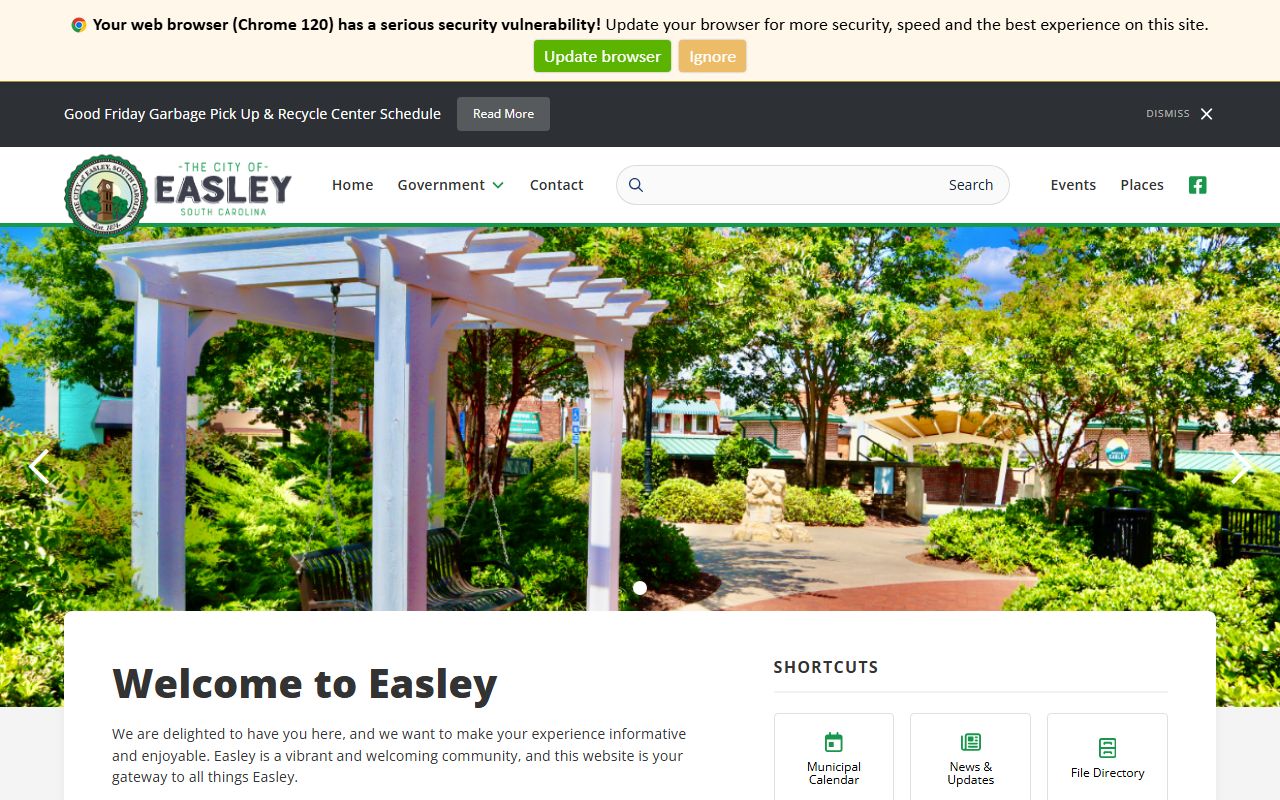
While city services and divorce records are handled through separate channels, knowing your local government resources can still help you navigate the broader process of accessing official documents in Easley.
Divorce Reports From the South Carolina DPH
The South Carolina Department of Public Health (DPH) maintains a separate set of records called divorce reports. These are not the same as court case files. The DPH holds divorce reports for cases finalized between July 1962 and December 2023. After December 2023, the DPH stopped collecting new divorce reports. A certified copy costs $12 and can be ordered through VitalChek or by contacting DPH directly at dph.sc.gov.
DPH divorce reports are useful when you need a brief official document confirming that a divorce occurred but do not need the full court file. They are commonly used for name change purposes, benefits applications, and some government filings. If you need the actual Final Order, that comes from the Pickens County Clerk of Court. The form number for the Final Order in South Carolina is SCCA299.
The SC Family Court system, which processes all Easley divorce cases, provides public information about court procedures and record access.
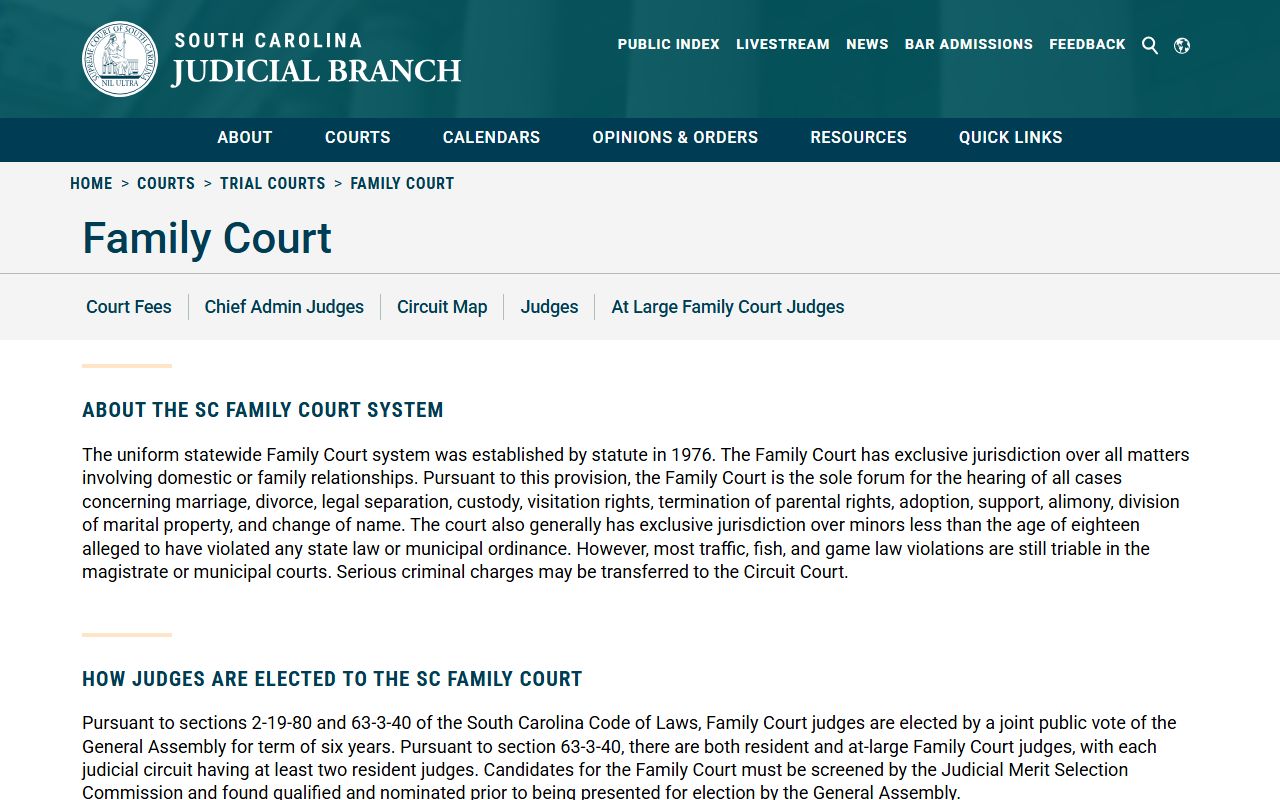
Understanding the difference between a DPH divorce report and a Family Court final order helps Easley residents request exactly the right document for their specific need.
Note: The DPH does not hold records for divorces finalized before July 1962. For cases before that date, the county courthouse is your only option.
Property Division in Easley Divorce Cases
South Carolina follows equitable distribution rules when dividing marital property. Under S.C. Code Ann. § 20-3-620, the court divides marital property in a way that is fair, though not necessarily equal. Judges weigh a range of factors including the length of the marriage, each spouse's financial contributions, and the economic circumstances of each party at the time of divorce. For Easley couples with significant assets, real estate, or business interests, this process can be complex and often benefits from legal representation.
Equitable distribution applies only to marital property, meaning assets and debts acquired during the marriage. Property owned before the marriage, inherited assets, and certain gifts are typically treated as separate property and are not subject to division. The distinction between marital and separate property is not always clear-cut, especially when assets have been commingled over the years.
Public Records Law and Access Rights in South Carolina
South Carolina's Freedom of Information Act, found at S.C. Code Ann. § 30-4-10, establishes the public's right to access government records. Court records, including divorce case files, are generally considered public records under state law. Any person can request access to most divorce documents through the Pickens County Clerk of Court. The clerk's office is required to respond to public records requests in a reasonable amount of time.
There are limited exceptions. Records involving minor children may be sealed or restricted. Orders of protection and certain sensitive filings may also have access limitations. If a judge has specifically sealed a case, that file is not available to the public. Outside of those exceptions, Easley divorce records are open to inspection. You do not need to be a party to the case to request access to a public file.
For free legal help navigating public records requests or understanding your rights, SC Legal Services serves eligible residents across South Carolina. The SC Bar's lawyer referral service can be reached at (803) 799-6653 for referrals to family law attorneys in the Pickens County area.
Timing and Process for Divorce Filings in Easley
South Carolina imposes a waiting period after a divorce is filed. The court will not make a referral to a hearing before two months have passed from the date of filing. The final decree cannot be entered before three months from filing. These waiting periods apply regardless of how simple or uncontested the case is. For Easley residents, planning around these timelines is important if a divorce needs to be finalized by a specific date.
Court forms for South Carolina divorce proceedings are available through the SC Judicial Branch at sccourts.org/court-forms/. The standard Final Order form is SCCA299. Filing a complete and accurate packet the first time reduces delays. Errors or missing documents can push back the hearing date significantly.
Pickens County Divorce Records
All Easley divorce cases are part of the Pickens County court record system. The Pickens County Family Court holds jurisdiction over all divorce matters for Easley residents, and the Pickens County Clerk of Court is the official custodian of those files. For detailed county-level information about accessing records, filing procedures, and court contacts, visit the Pickens County records page.
Nearby South Carolina Cities
Easley is part of the SC Upstate region. Other nearby cities also have divorce record resources available through their respective county family courts. Explore the pages below for information on records in communities close to Easley.