
Sumter County Divorce Records
Sumter County divorce records are kept by the Clerk of Court at the Family Court in Sumter, South Carolina. The county sits in the east-central part of the state and is part of the 3rd Judicial Circuit. All divorce cases filed in Sumter County go through Family Court, which has handled domestic matters since South Carolina established the Family Court system in 1976. Case files, final decrees, and certified copies are available to the public through the clerk's office. This guide explains how to find and request these records.
Sumter County Quick Facts
Sumter County Family Court
The Sumter County Family Court handles all divorce and domestic matters for county residents. It is part of the 3rd Judicial Circuit, which serves Sumter and Lee counties. The courthouse is located in the city of Sumter, which is also the county seat. Judges hear cases involving divorce, property division, alimony, and related matters under South Carolina law. The Clerk of Court maintains all case files and is the proper contact for record requests.
The following image shows the Sumter County official web portal, where court information is listed.
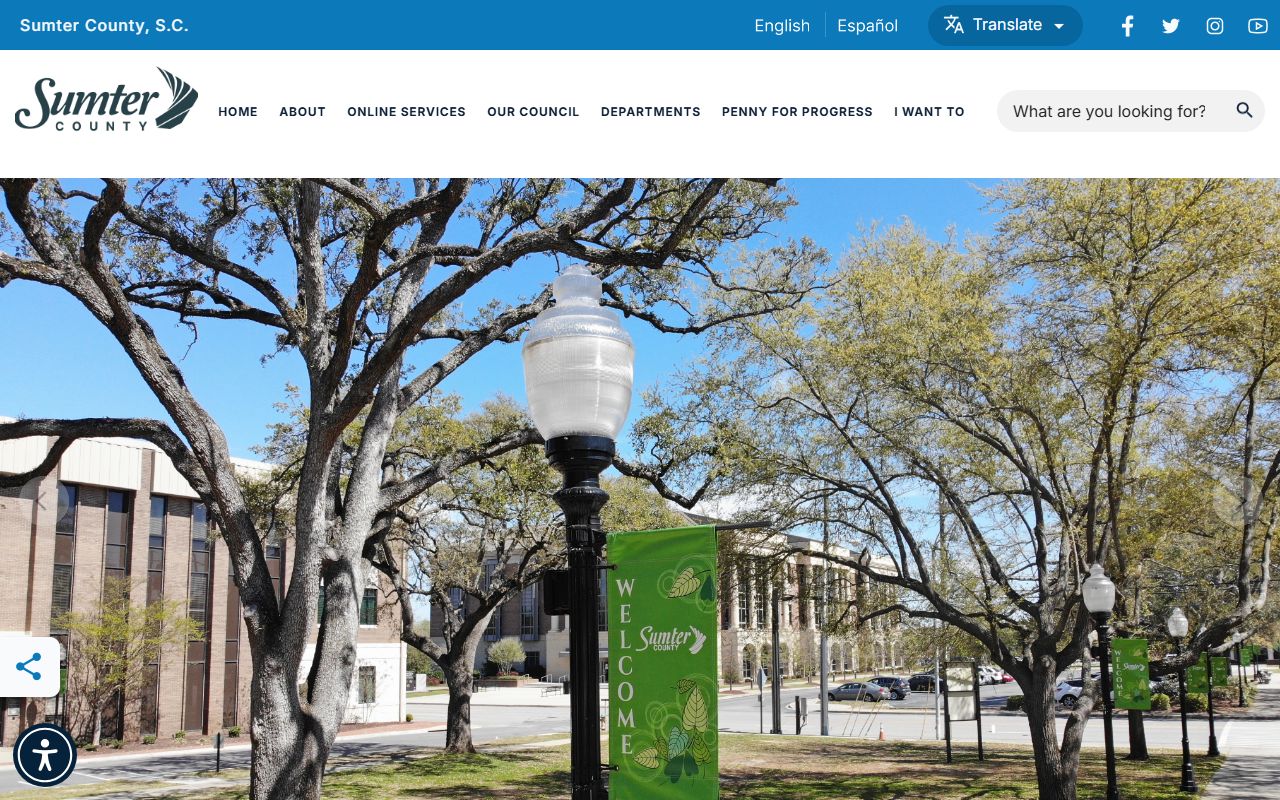
The portal links to the Clerk of Court office, which maintains family court records dating back decades.
| Court | Sumter County Family Court 141 North Main Street, Sumter, SC 29150 Phone: (803) 436-2217 |
|---|---|
| Hours | Monday through Friday, 8:30 AM to 5:00 PM |
| Website | sumtercountysc.org |
Note: Bring a valid photo ID when visiting the clerk's office in person to request records.
How to Search Sumter County Divorce Records
There are a few ways to search for divorce records in Sumter County. The most direct method is to visit the Clerk of Court at 141 North Main Street in Sumter. Staff can look up cases by name or case number. You can also use the state's online case search tool to find basic case details before your visit.
The SC Judicial Branch case records search lets you look up family court cases by party name, case number, or filing date. Not all case details are shown online, but you can confirm whether a case exists and get the case number. That number makes in-person requests much faster.
Steps to search in person at the Sumter County clerk's office:
- Go to 141 North Main Street, Sumter, SC 29150
- Ask for family court records at the clerk's window
- Provide the full name of one or both parties
- Give the approximate year the case was filed
- Request the documents you need — full file or just the final decree
The following image shows the SC Courts search portal used for locating Sumter County case records online.
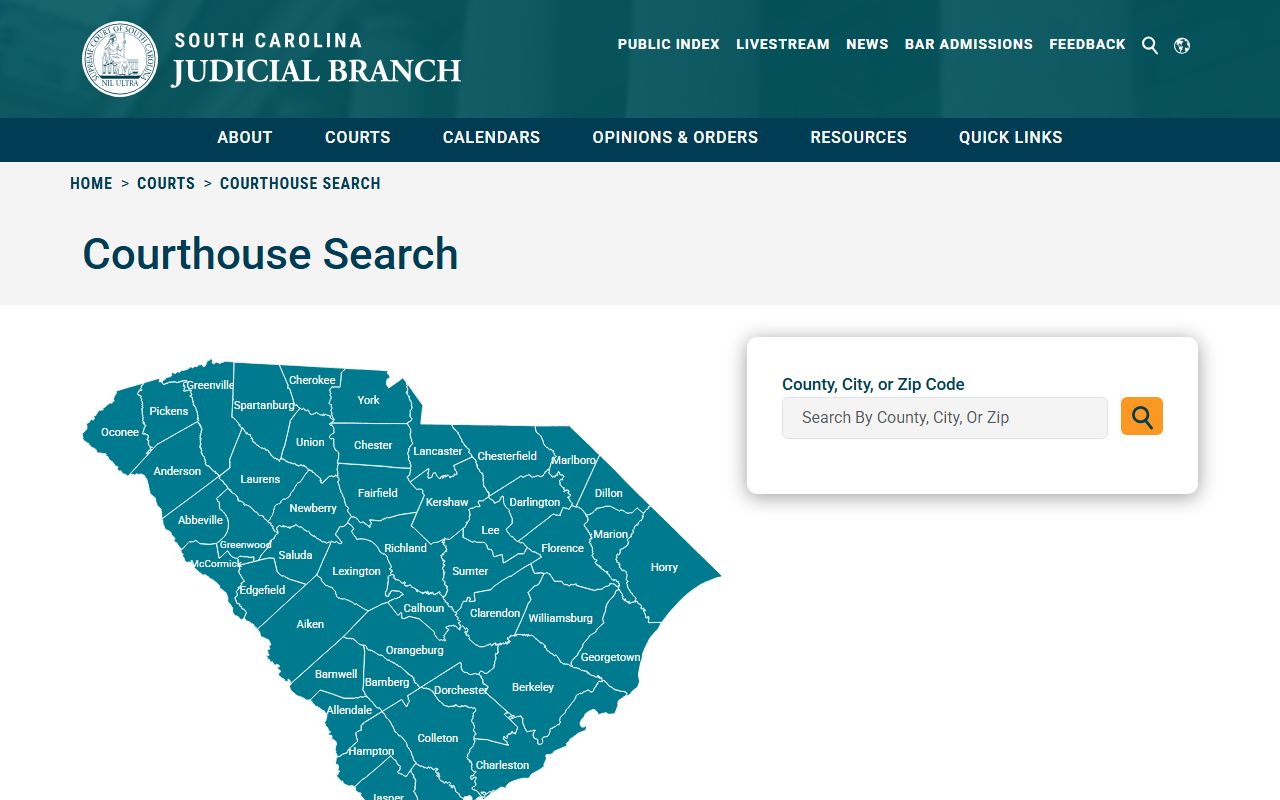
The online tool works well for recent cases. Older records may only be available in person at the courthouse.
Note: The case records search shows public data only. Sealed records require a court order to access.
Fees for Divorce Record Copies
The Sumter County Clerk of Court charges fees for copies of divorce records. Standard copy fees apply per page, and certified copies cost more. Most people requesting a full case file should expect to pay around $150 for filing-related costs if they are initiating a divorce, while copy fees for existing records are lower. Certified copies are often needed for legal or financial purposes.
Common copy fees at Sumter County Family Court include a per-page charge for plain copies and an additional certification fee for certified copies. The clerk can tell you the current rates when you call or visit. Fee waivers may be available if you qualify based on income. Ask the clerk about the waiver process if cost is a concern.
Note: Fees are set by state law and may change. Confirm current rates with the clerk before your visit.
Filing for Divorce in Sumter County
To file for divorce in Sumter County, at least one spouse must meet the residency requirement under South Carolina Code § 20-3-30. If both spouses live in South Carolina, one must have lived here for at least three months. If only one spouse lives in the state, that person must have been a resident for at least one year.
South Carolina recognizes both fault and no-fault grounds for divorce under § 20-3-10. Fault grounds include adultery, physical cruelty, habitual drunkenness, and desertion for one year. The no-fault ground is a continuous separation of one year. Most cases in Sumter County are filed on the no-fault ground. The filing process begins at the Family Court clerk's office, where you submit a Summons and Complaint along with the required forms. The SC Courts website provides standardized forms including the SCCA299 divorce form packet.
Property acquired during the marriage is subject to equitable distribution under § 20-3-620. The court divides assets fairly, though not always equally. Alimony may also be awarded under § 20-3-130 based on factors like length of marriage and each spouse's income.
Note: After filing, a waiting period of 60 to 90 days typically applies before a final hearing can be scheduled.
What Divorce Records Contain
A Sumter County divorce case file can include many documents depending on how the case was handled. Contested cases tend to have larger files. Uncontested cases may have fewer pages but still contain the core legal documents.
- Summons and Complaint for divorce
- Financial declarations from both parties
- Property settlement agreements
- Alimony orders or agreements
- Parenting plans and custody orders
- The final decree of divorce
- Any appeals or post-judgment motions
The final decree is the most commonly requested document. It proves the divorce is legal and lists the date it became final. Attorneys, title companies, and government agencies often require a certified copy of the decree.
Note: Records from before 1976 may be filed under a different court structure. Ask the clerk about older records.
Divorce Certificates from SC DHEC
The South Carolina Department of Public Health (DPH) maintains statewide divorce records separate from the court system. These records cover divorces that occurred from July 1962 through December 2023. A divorce report from DPH costs $12 and can be ordered through their vital records office or through VitalChek.
DPH divorce reports are not the same as certified court decrees. They serve as a summary record showing that a divorce took place. They are useful for things like name changes, updating insurance, or genealogy research. For legal matters that require the full decree, you still need to contact the Sumter County clerk's office.
The image below shows the DPH vital records page where divorce reports can be requested.
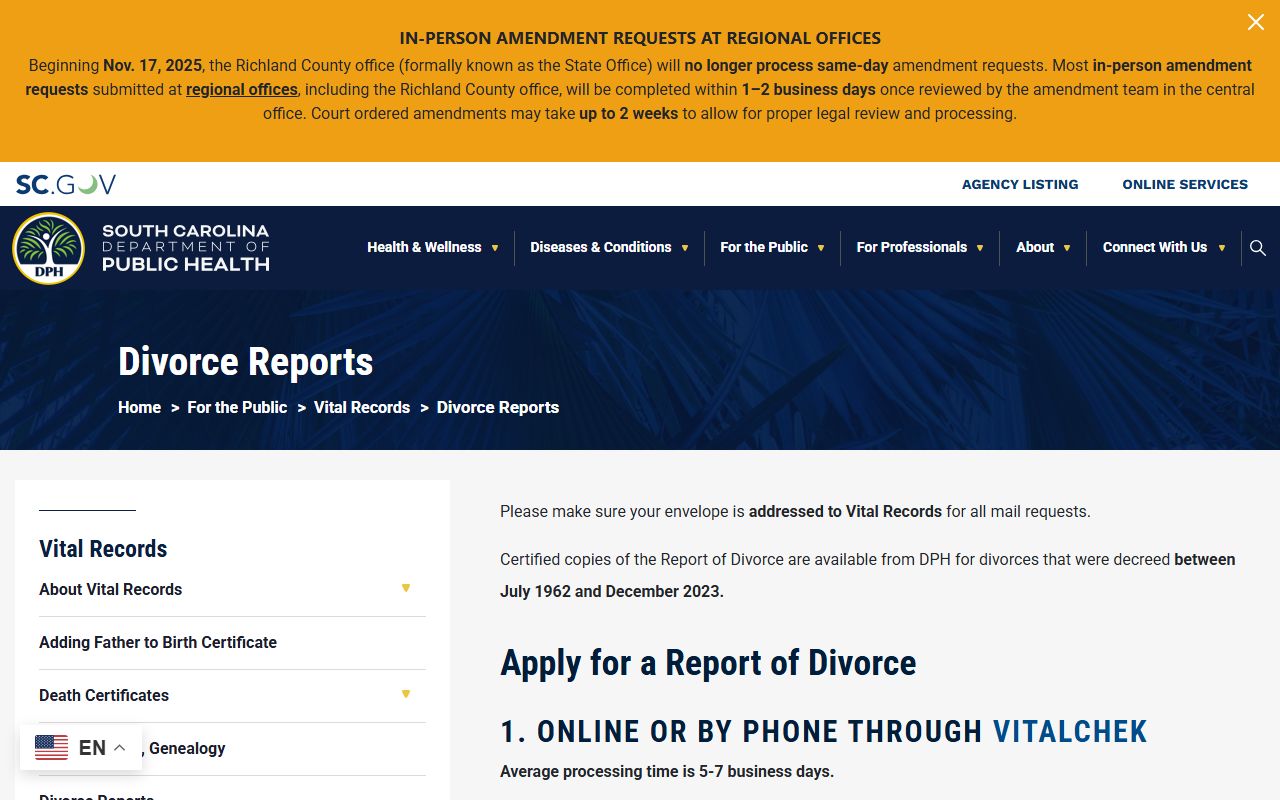
As of January 1, 2026, DPH divorce reports no longer include addresses of the parties. This change applies to all reports issued on or after that date.
You can also request certified copies through the SC Secretary of State's office if you need an apostille for international use.
Note: DPH records cover divorces through December 2023. For more recent cases, contact the Sumter County clerk directly.
Legal Help in Sumter County
Divorce cases can be complex. If you are not sure how to proceed, legal help is available in Sumter County. South Carolina Legal Services offers free or low-cost assistance to those who qualify based on income. Their website at sclegal.org has resources and contact information for applying for help.
Private family law attorneys in Sumter County can also guide you through the filing process, represent you in court, and help with property division or custody matters. The SC Family Court page lists general information about how the court works and what to expect during hearings.
Note: Self-represented litigants are allowed in Family Court, but legal guidance is strongly recommended for contested matters.
Public Access to Divorce Records
Divorce records in South Carolina are generally public records under the SC Freedom of Information Act. This means most people can view or request copies of divorce case files without a personal connection to the case. The court file is open unless a judge has ordered it sealed.
Some information may be restricted. Financial records, social security numbers, and certain sensitive details may be redacted. As of January 1, 2026, home addresses are no longer included in records issued by DPH. The court case file itself may still contain address information depending on when it was filed.
Sumter County has a strong tradition of maintaining accessible public records. Shaw Air Force Base brings many military families to the area, and the clerk's office is familiar with requests tied to military records and benefits. If you are a military member or veteran requesting records, mention this when you contact the office.
Genealogy researchers can also access older divorce records through the Library of Congress South Carolina genealogy guide, which points to statewide vital records resources.
Note: Divorce was not legal in South Carolina until April 1949. Records from before that date do not exist.
Cities in Sumter County
Sumter is the county seat and largest city in Sumter County. Most county residents file divorce cases at the courthouse in Sumter.
Nearby Counties
Sumter County borders several other counties in east-central South Carolina. Each has its own Family Court and clerk's office.