
Lee County Divorce Records
Lee County divorce records are maintained by the Clerk of Court in Bishopville and are part of the public record system overseen by South Carolina's Family Court. If you need to search for a divorce case, request a certified copy of a decree, or confirm whether a divorce was finalized in this county, the Lee County Family Court is the place to start. This small rural county in the central eastern part of the state handles all domestic matters through its Family Court division, and most records from past decades through the present are accessible to the public through the court or through the SC Judicial Branch case records portal.
Lee County Quick Facts
Lee County Family Court
The Lee County Family Court sits in Bishopville, the county seat known widely as the Button Capital of the World. The court is part of South Carolina's 3rd Judicial Circuit and holds exclusive jurisdiction over all divorce and domestic relations matters for county residents. South Carolina established its statewide Family Court system in 1976, giving it sole authority over divorce, child custody, support, and related proceedings. Before that year, these matters were handled in a less uniform way across different courts.
The Clerk of Court's office manages all case files and is responsible for accepting new filings, maintaining the official record of proceedings, and providing access to case documents. When you visit the courthouse in Bishopville, the clerk's staff can help you locate a case by name or case number, pull physical files for inspection, and process requests for certified copies. For general county information and office contacts, the Lee County government website is a useful starting point.
| Court | Lee County Family Court 123 Church Street, Bishopville, SC 29010 Phone: (803) 484-3414 |
|---|---|
| Hours | Monday through Friday, 8:30 AM to 5:00 PM |
| Website | leecountysc.org |
The SC Judicial Branch directory of clerks of court provides updated contact details for the Lee County office and all other county clerks across the state.
The Lee County courthouse in Bishopville serves as the central hub for all divorce filings and case records in this county. The official Lee County portal provides contact information for courthouse offices.

The county portal lists current office hours, court schedules, and staff contacts for the Clerk of Court's office in Bishopville.
Note: The Clerk of Court's office in Bishopville does not offer extended evening or weekend hours, so plan your visit during the standard weekday schedule.
How to Search Lee County Divorce Records
There are two main ways to search for divorce records in Lee County. The first is through the South Carolina Judicial Branch case records search, which is a free online tool that covers Family Court cases statewide. You can look up cases by party name, case number, or filing date. The online index gives you basic case details, hearing dates, and a list of docket entries, though not every older case has full digital records.
The second method is an in-person visit to the Lee County Clerk of Court at 123 Church Street in Bishopville. Staff can search the local index by name or case number and pull paper files for cases that may not appear fully in the online system. In-person visits are especially useful for older cases filed before digital indexing became standard. When searching, it helps to bring the full legal names of both parties and a rough timeframe for when the divorce may have been filed.
To locate a case efficiently, it helps to have the following information ready:
- Full legal name of one or both parties
- Approximate year of filing or final decree
- Case number, if known
- County where the case was filed
Note: As of January 1, 2026, home addresses have been removed from the public index for Family Court cases statewide, so current records will not display residential address information.
Lee County Divorce Filing Fees
Filing a divorce in Lee County costs approximately $150, which covers the initial summons and complaint filed with the Family Court. This figure reflects the general range for South Carolina family courts, though the exact amount can vary based on the type of case and any additional motions or filings involved. The Clerk of Court in Bishopville can give you the current fee schedule when you visit or call.
Certified copies of divorce decrees or other documents in the case file carry a separate fee, typically a few dollars per page plus a certification charge. If you need multiple certified copies, for example for a name change or legal proceeding, it is worth confirming the per-copy cost before you visit.
People who cannot afford court costs may ask the clerk for a fee waiver application. The court reviews these on a case-by-case basis. The SC Legal Services website provides guidance on fee waivers and connects low-income residents with free legal assistance throughout the state.
Filing for Divorce in Lee County
To file for divorce in Lee County, at least one spouse must meet the residency requirement set out in South Carolina law. Under SC Code § 20-3-30, if only one spouse lives in South Carolina, that person must have been a resident for at least one year before filing. If both spouses live in South Carolina, the required period drops to three months. These rules exist to ensure the state has a genuine connection to the marriage before a court here ends it.
South Carolina law under § 20-3-10 lists five grounds for divorce: adultery, desertion for at least one year, physical cruelty, habitual drunkenness or drug use, and living separate and apart for one year with no cohabitation. That last ground is the no-fault option and is by far the most common basis used in Lee County and across the state. It simply requires the couple to have lived apart for a continuous year.
Venue rules under § 20-3-60 say the case should be filed in the county where the defendant lives. If the defendant lives outside South Carolina, the person filing may use their own county of residence. This means that most Lee County residents whose spouses also live locally will file right here in Bishopville.
Once filed, the court will not refer the case to a judge for a hearing before two months have passed, and no final decree can be issued before three months from the filing date. When it comes to dividing marital property, South Carolina follows equitable distribution under § 20-3-620, which means the court divides assets in a fair way but not necessarily a fifty-fifty split. Courts weigh factors like the length of the marriage, each spouse's contributions, and each person's economic circumstances. The SC court forms library includes the standard divorce petition and the Final Order form SCCA299 used in all South Carolina divorces.
What Lee County Divorce Records Include
A divorce case file in Lee County contains a range of documents produced throughout the proceeding. The file typically starts with the summons and complaint, which set out the grounds for divorce and any requests for relief. From there the file grows as the case moves forward.
Common documents found in a Lee County divorce file include:
- Summons and complaint
- Proof of service on the other party
- Financial declarations from both spouses
- Any temporary orders issued during the case
- Settlement agreements or separation agreements
- The Final Order of Divorce (form SCCA299)
The final decree is the document most people need when they require proof that a divorce was granted. It carries the case number, the names of both parties, the date the court signed the order, and the judge's signature. Certified copies of this document are available directly from the Clerk of Court in Bishopville.
Note: Financial declarations and exhibits containing sensitive personal data may have limited public access in some cases, depending on how the court handled those materials during the proceeding.
Divorce Certificates and DPH Reports in Lee County
South Carolina offers two different ways to get official documentation of a divorce. The first is a certified copy of the court decree from the Clerk of Court. The second is a divorce report from the South Carolina Department of Public Health. These are separate documents and serve different purposes.
The SC Department of Public Health maintains divorce reports for divorces finalized between July 1962 and December 2023. These are statistical records compiled from court reports and differ from the actual court decree. A certified copy from DPH costs $12 and can also be ordered through VitalChek for added convenience. For divorces outside the July 1962 to December 2023 window, or if you need the actual court order rather than a summary report, you will need to contact the Clerk of Court directly.
The SC DPH divorce reports page explains what information these records contain and how to request them, including by mail or in person at the DPH office in Columbia.
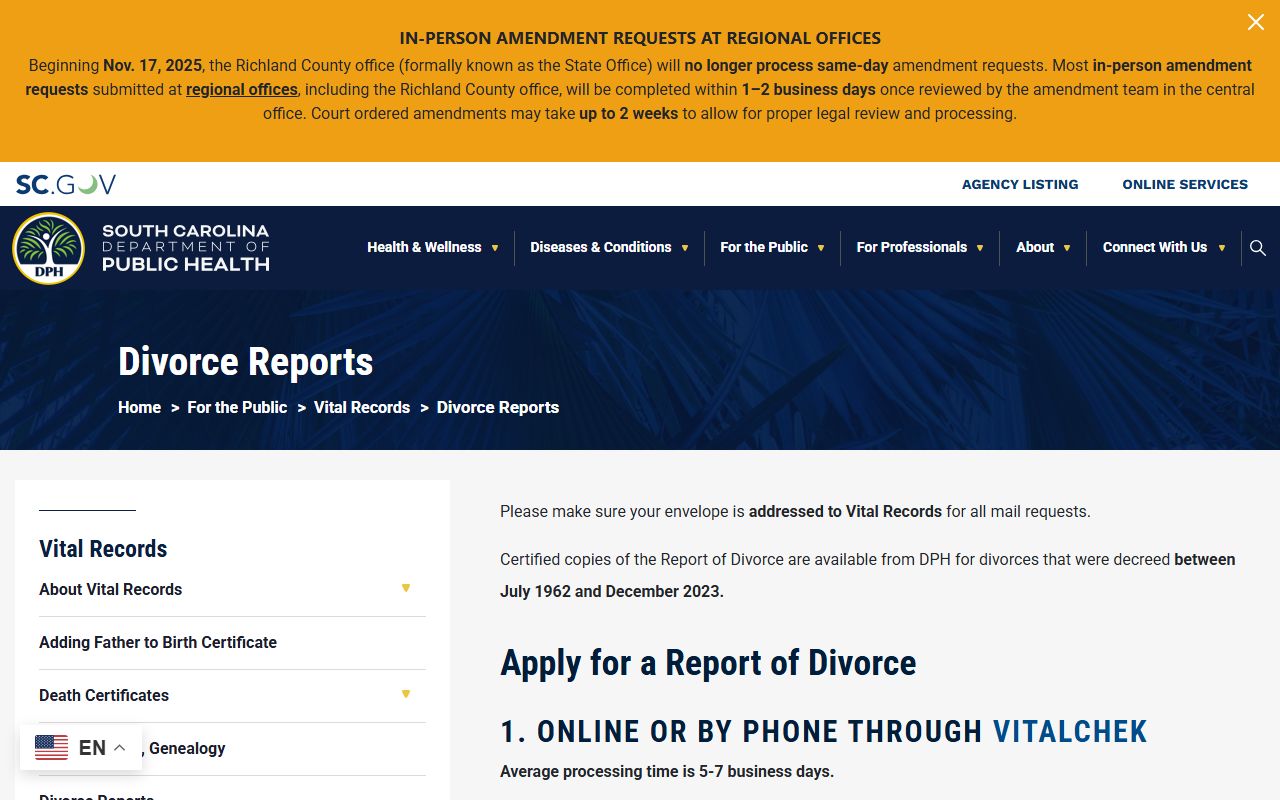
The DPH maintains records covering decades of divorce filings and can provide certified reports useful for legal and genealogical purposes.
If you need to certify a document for use in another country, the SC Secretary of State apostille service can authenticate certified copies of South Carolina vital records and court documents.
Legal Help for Lee County Residents
Divorce cases can involve complex issues even when both parties agree on most things. Lee County residents who need legal guidance have several options. The SC Legal Services organization provides free civil legal assistance to people who meet income guidelines, and family law matters including divorce are among the areas they handle. Their website has self-help resources, guides on the divorce process, and a way to apply for assistance online.
The SC Bar Lawyer Referral Service at (803) 799-6653 can connect you with a licensed attorney in your area who handles family law. A referral does not commit you to hiring anyone, but it gives you a chance to discuss your situation and understand your options before deciding how to proceed.
For people who want to handle an uncontested divorce on their own, the SC Judicial Branch court forms page has the standard forms used in Family Court, including the final order form SCCA299. These forms come with instructions, though the court cannot give legal advice on how to complete them.
Public Access to Lee County Divorce Records
South Carolina's Freedom of Information Act, found at SC Code § 30-4-10, establishes the right of the public to inspect and copy government records, including court records maintained by the Clerk of Court. Family Court divorce records in Lee County are generally open to public inspection, which means anyone can request to view a case file or obtain copies of documents from a finalized divorce case.
There are limits to what is public. Records involving minor children, such as custody orders and guardian reports, may be sealed or have restricted access. Cases involving domestic violence or other sensitive circumstances can also have portions sealed by court order. The clerk's office can tell you which documents in a particular file are available for public review.
The SC Judicial Branch courthouse directory is a helpful resource for confirming courthouse addresses, phone numbers, and available services at the Lee County location.
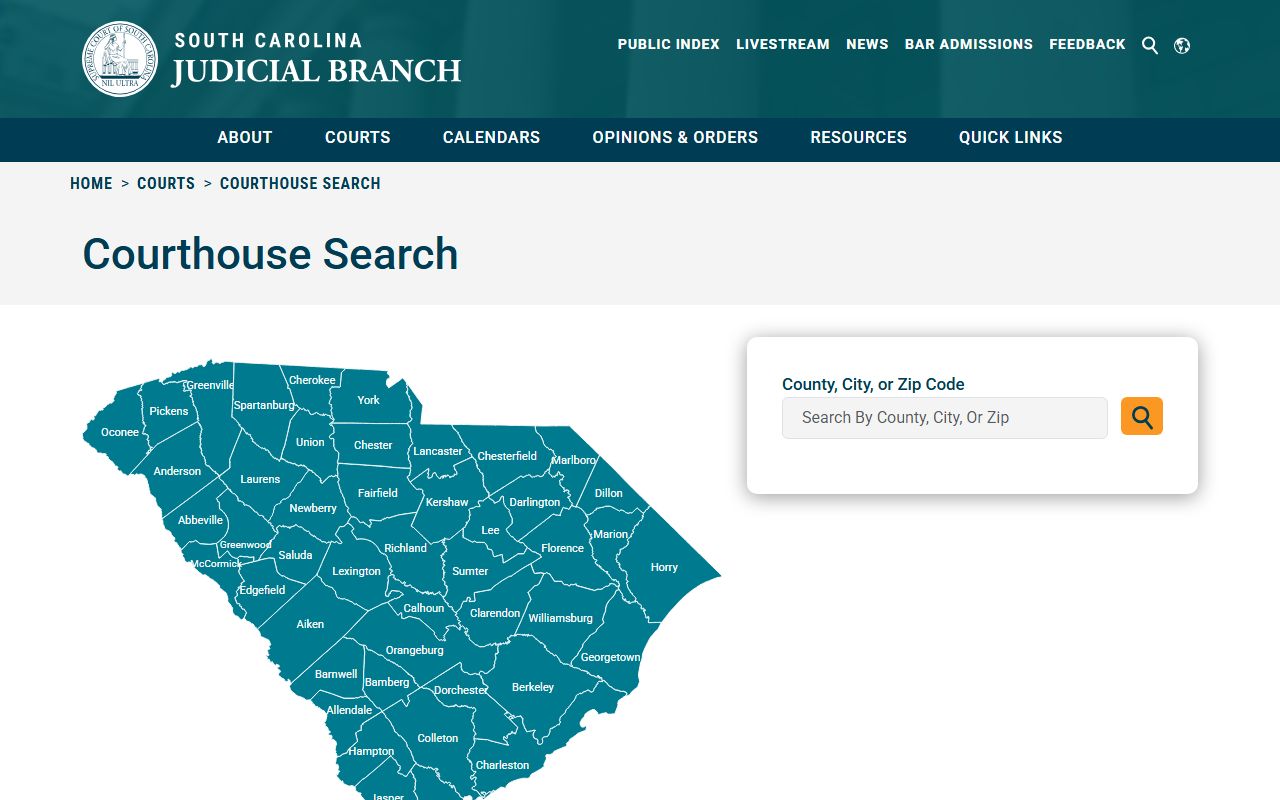
The SC courts site provides direct links to the Lee County Family Court and information on requesting records in person or through the online portal.
Historical divorce records in Lee County going back to 1949, when divorce first became legal in South Carolina, may be available on microfilm or in archival form. The Library of Congress genealogy guide for South Carolina points to resources for researchers looking into older records from this era.
Cities in Lee County
All Lee County divorce cases are filed at the Lee County Family Court in Bishopville. There are no separate city-level courts for domestic matters in this county. All residents, regardless of where they live within Lee County, file and retrieve divorce records through the Clerk of Court at 123 Church Street in Bishopville.
Nearby Counties
If you are unsure which county a divorce was filed in, or if parties lived near a county line, checking neighboring counties may be helpful. The counties bordering or near Lee County each have their own Family Court and public records.