
Union County Divorce Records
Union County divorce records are filed and maintained at the Family Court in Union, South Carolina. The county is in the north-central part of the state, part of the 7th Judicial Circuit. The Clerk of Court keeps all circuit and family court records for the county. Whether you need a final decree, a full case file, or just want to confirm a case exists, the clerk's office is the right place to start. This guide covers how to find, request, and understand these records.
Union County Quick Facts
Union County Family Court
Union County Family Court is part of the 7th Judicial Circuit and handles all divorce and domestic cases for county residents. The courthouse is in the city of Union, which is also the county seat. The Clerk of Court maintains all family court records, including divorce files going back to the court's establishment in 1976. For older records, staff can advise on where to look.
The image below is from the Union County Clerk of Court page, which lists contact details and office services.
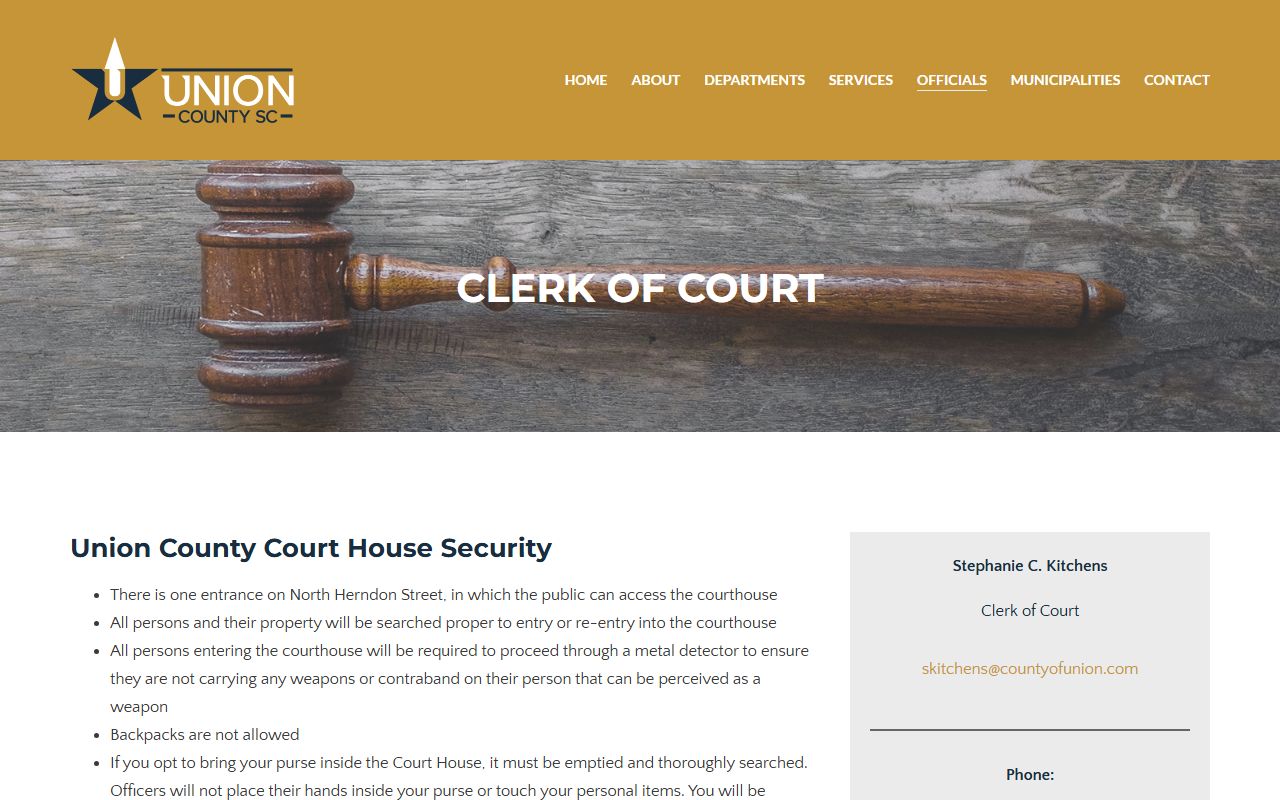
The clerk's office is the main point of contact for all family court record requests in Union County.
| Court | Union County Family Court 141 North Herndon Street, Union, SC 29379 Phone: (864) 429-1630 |
|---|---|
| Hours | Monday through Friday, 8:30 AM to 5:00 PM |
| Website | countyofunion.org |
Note: Call ahead during holidays or court closure periods, as hours may vary.
How to Search Union County Divorce Records
Searching for divorce records in Union County can be done online or in person. The state's online case search is a good first step. The SC Judicial Branch case records search lets you look up cases by name or case number without visiting the courthouse. You can confirm a case exists and note the case number before making a formal request.
The image below shows the SC Courts search portal used for locating Union County case records.
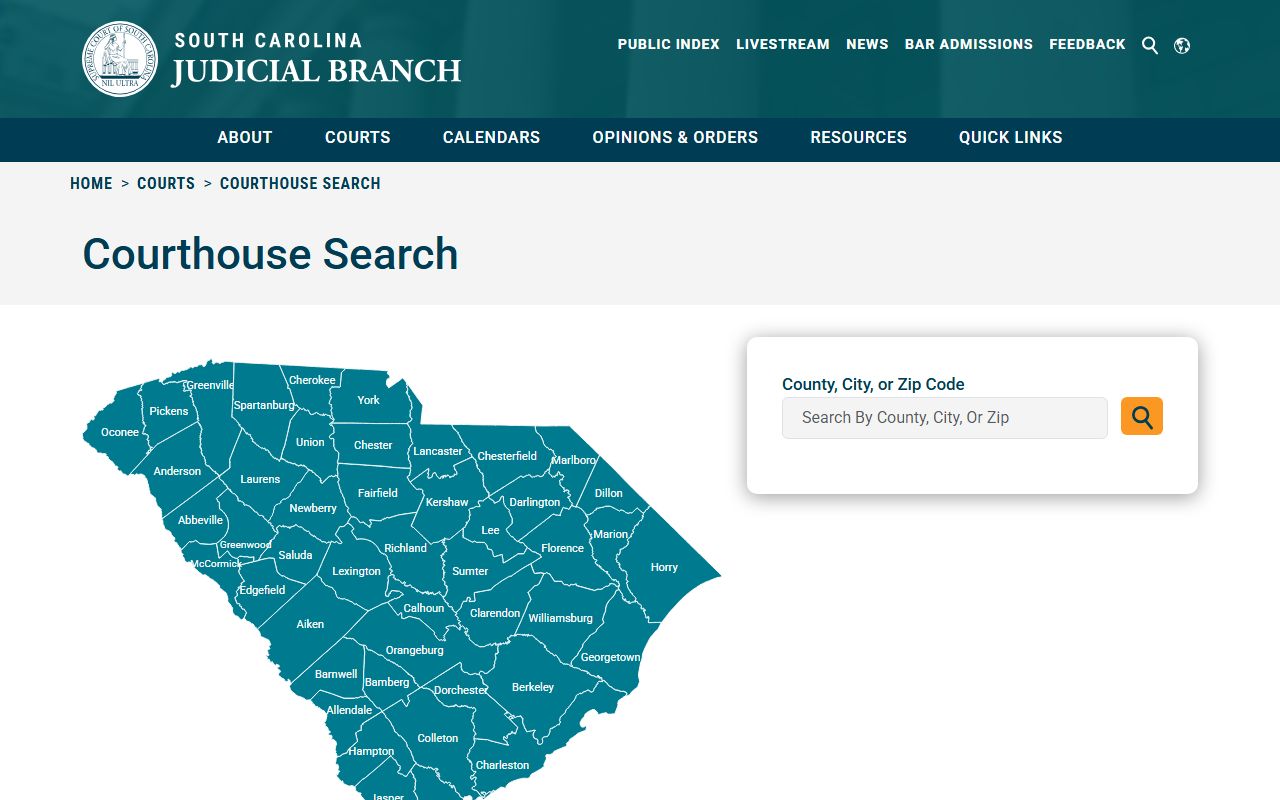
For full case documents, you must contact the clerk in person or by phone. Online access shows basic case data only.
Steps for requesting records in person at Union County:
- Visit 141 North Herndon Street, Union, SC 29379
- Go to the Clerk of Court window
- Provide the full names of both parties if known
- Give the approximate filing year
- Specify what documents you need
- Pay any applicable copy fees at the time of pickup
The image below is the Union County portal, which links to court services and contact information.
Note: Mail requests are accepted at many SC clerks' offices. Contact the Union County clerk to confirm this option and current turnaround times.
Fees for Divorce Record Copies
Union County charges standard copy fees for divorce records. Plain copies are charged per page. Certified copies carry an additional certification fee on top of the per-page rate. If you need a full case file with many pages, the total cost can add up. Call the clerk at (864) 429-1630 to ask about current rates before your visit.
A fee waiver may be available for those who cannot afford copy costs. Ask the clerk about the waiver process and what paperwork is required. The initial filing fee for a new divorce case is around $150, though this does not apply if you are only requesting copies of an existing record.
Note: Payment methods accepted at the clerk's office may include cash, check, or credit card. Confirm in advance to avoid issues.
Filing for Divorce in Union County
To file for divorce in Union County, you must meet the residency requirement set out in South Carolina Code § 20-3-30. If both spouses live in South Carolina, one must have been a resident for at least three months. If only one spouse lives in the state, that spouse must have lived here for at least one year before filing.
South Carolina law under § 20-3-10 allows divorce on both fault and no-fault grounds. Fault grounds include adultery, physical cruelty, habitual drunkenness, and willful desertion for one year. The no-fault ground requires a continuous separation of one year with no cohabitation during that time. No-fault cases are the most common in Union County. The filing process starts at the Family Court clerk's window, where you submit the required forms and pay the filing fee. Standard forms are available through the SC Courts court forms page.
The court divides marital property through equitable distribution as outlined in § 20-3-620. Alimony may be ordered under § 20-3-130 based on the length of the marriage and each spouse's financial situation.
Note: A waiting period of at least 60 to 90 days applies after filing before a final hearing can be set.
What Is in a Divorce Case File
A divorce case file in Union County may hold many documents. The size depends on whether the case was contested or agreed upon by both parties. Most files include at minimum the core filing documents and the final order.
- Summons and Complaint for divorce
- Proof of service on the other party
- Financial declaration forms
- Property and debt agreements
- Alimony agreements or court orders
- Parenting plan if children are involved
- Final decree of divorce
The final decree is the document most people need. It confirms the marriage ended legally and shows the date it was finalized. Many agencies and institutions require a certified copy of the decree.
Note: Some pages in older files may be faded or difficult to read. Ask the clerk if a digital scan is available for older records.
Divorce Certificates from SC DPH
The South Carolina Department of Public Health (DPH) holds statewide divorce records covering cases from July 1962 through December 2023. A DPH divorce report costs $12 and can be ordered through the DPH vital records page or through VitalChek.
These reports are a summary record. They are useful for name changes, insurance updates, and genealogy research. They are not a substitute for a certified court decree in most legal contexts. For anything that requires an official court document, contact the Union County Clerk of Court.
As of January 1, 2026, DPH divorce reports no longer list home addresses of the parties. This change applies to all reports ordered on or after that date. If you need address history from an older record, you must request the original court file through the clerk's office.
Note: DPH records end at December 2023. For divorces finalized after that, only the court file is available.
Legal Help in Union County
Union County is a rural area, and legal resources can be limited. South Carolina Legal Services provides free or low-cost legal help to qualifying residents. You can apply at sclegal.org or call their statewide number. They help with divorce filings, custody, and other family law matters.
Private family law attorneys in Union and the surrounding area can handle more complex cases. The SC Family Court information page explains how the court process works and what forms are needed. If you are representing yourself, read that page carefully before your first court date.
Note: The courthouse in Union is the only location for filing and hearings in Union County. There are no satellite offices.
Public Access to Divorce Records
Divorce records in South Carolina are public records under the SC Freedom of Information Act. Anyone can view or request copies of most divorce case files without being a party to the case. The file is open unless a judge has sealed it, which is rare in standard divorce cases.
Certain sensitive details may be redacted from public copies. Social security numbers and financial account numbers are typically removed. As of January 1, 2026, home addresses have been removed from DPH-issued records, though older court files may still contain this information. The clerk's office follows state guidelines on what can be shared.
Union County is a smaller, rural county. Its records office handles fewer requests than urban counties, which often means faster turnaround times. If you are a genealogy researcher, older divorce records may help trace family history. The Library of Congress guide to South Carolina vital records is a useful starting point for older research.
Note: Divorce was not legal in South Carolina until April 1949. No divorce records exist for the state before that date.
Cities in Union County
All Union County divorce cases are filed at the Union County Family Court. There are no separate municipal filing locations in the county.
Nearby Counties
Union County shares borders with several Upstate South Carolina counties. Each has its own Family Court handling divorce cases.